Found By Accident contains affiliate links and is a member of the Amazon Services LLC Associates Program. If you make a purchase using one of the Amazon links (or other affiliate links), we may receive compensation at no extra cost to you. See our disclosure policy for more information.
13 Overlooked Travel Gadgets That Might Be The Smartest Upgrades You’ve Never Considered
Packing for a trip often feels like a balancing act between bringing everything you need and keeping your luggage weight under control. So most travelers focus on the essentials like clothes, toiletries, and travel documents, leaving little thought for the tools that can solve the small, annoying problems that pop up on the road.
But experienced explorers know that the difference between a stressful trip and a seamless one often comes down to having the right gear at the right time.
Adding a few specific gadgets to your bag can save you money, keep you safe, and significantly improve your comfort levels while you are away from home.
We aren’t talking about the usual suspects like travel adapters or neck pillows, but rather the overlooked items that quietly do the heavy lifting.
Whether you are navigating a humid city street, stuck in a chilly airport terminal, or trying to enjoy a cup of tea in a hotel room with questionable amenities, these tools have you covered.
By integrating these overlooked gadgets into your packing list, you ensure that you are prepared for the unexpected moments that define travel.
Digital Luggage Scale
Few things kill the excitement of a vacation faster than arriving at the airport check-in counter and being told your bag is overweight.
Airlines have become increasingly strict with baggage allowances, and fees for exceeding the limit can range anywhere from $50 to over $200 per bag, depending on the carrier and route.
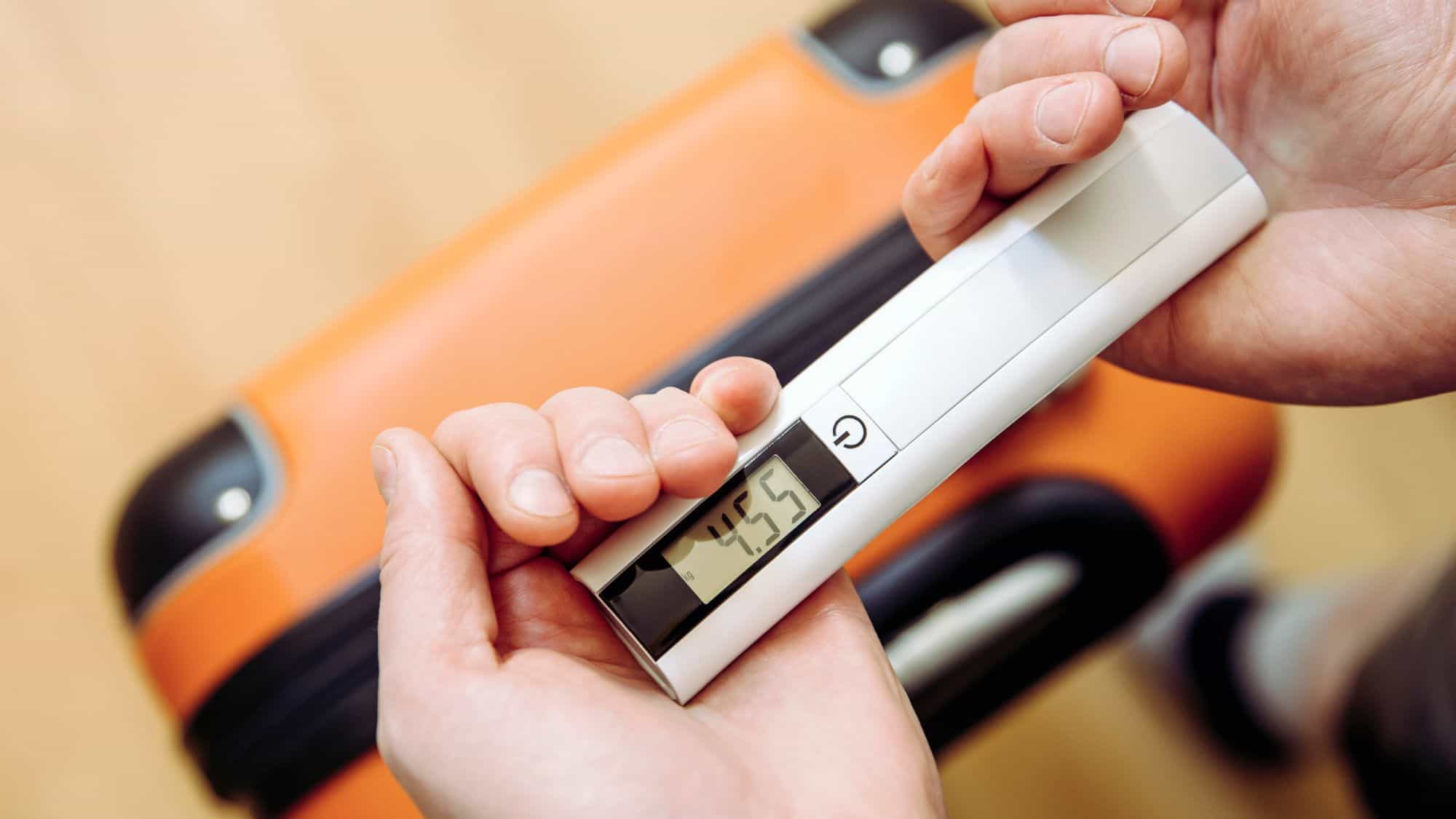
A digital luggage scale eliminates this anxiety completely by allowing you to weigh your bags before you ever leave your house or hotel room. And these compact devices are small enough to fit in the palm of your hand and weigh only a few ounces, so bringing one along won’t add any noticeable bulk to your load.
Using one is simple: you loop the strap around your suitcase handle, lift the bag, and wait for the screen to lock onto the weight. Most quality scales are accurate to within 0.1 pounds, giving you a precise reading that matches what the airline agents see.
This is especially helpful on your return trip when you have added souvenirs and gifts to your luggage.
Finding out you are outside the weight limits allows you to redistribute items between your checked bag and carry-on before you get to the airport, saving you from the embarrassment of unpacking your dirty laundry in front of a line of impatient travelers.
Collapsible Travel Kettle

Hotel room coffee makers are notoriously difficult to clean, and recent studies have shown they can harbor significant amounts of bacteria and mold due to improper sanitation. Relying on them for your morning caffeine fix or a late-night cup of tea is often a gamble you don’t want to take.
A collapsible travel kettle solves this hygiene issue instantly, giving you full control over the water you boil and the beverages you consume.
These clever devices are typically made from food-grade silicone, allowing the body to fold down to a height of just two or three inches, which makes them incredibly easy to slip into a carry-on or backpack without consuming valuable space.
Beyond hygiene, these kettles are practical for saving money on food. Being able to boil water means you can prepare instant oatmeal, dehydrated meals, or soup right in your room, avoiding the high costs of dining out for every single meal.
Most modern travel kettles come with dual voltage capabilities, switching between 110V and 220V with a simple turn of a dial. This feature is crucial because plugging a standard 110V appliance into a European 220V outlet without a converter will instantly fry the heating element.
With a personal kettle, you ensure a hot, safe drink is always just a few minutes away, no matter where you are staying.
Mini Bluetooth Speaker

Headphones are great for solitary listening, but there are times when you want to share music or a podcast with your travel companions. A mini Bluetooth speaker transforms a quiet hotel room or a beach picnic into a lively environment.
While smartphone speakers have improved, they still lack the depth and volume needed to fill a space or be heard over the sound of wind or waves.
Portable speakers, on the other hand, have advanced significantly in recent years, with many offering battery lives that exceed 10 hours on a single charge, ensuring the music lasts as long as your day does.
Durability is a key feature to look for when choosing a travel speaker. Many top-rated portable options now come with an IPX7 waterproof rating, meaning they can withstand being submerged in up to three feet of water for 30 minutes without sustaining damage. This makes them perfect for poolside lounging or unexpected rain showers during a hike.
Furthermore, the sound quality in these small packages is often surprising, using passive radiators to produce bass that feels much larger than the device’s physical size.
Having a speaker on hand allows you to create an atmosphere that feels a bit more like home, helping you relax after a long day of sightseeing.
Wireless Bluetooth Noise-Canceling Headphones

The ambient noise inside an airplane cabin typically ranges from 80 to 85 decibels, which is roughly equivalent to the sound of a noisy restaurant or heavy traffic. Over the course of a long-haul flight, this constant drone contributes significantly to fatigue and jet lag.
Wireless noise-canceling headphones use microphones to monitor incoming sound and create an inverse sound wave to cancel it out, effectively reducing that background roar by up to 30 decibels.
This technology allows you to listen to audio at lower volumes, protecting your hearing while creating a bubble of quiet that makes sleep much more attainable.
Beyond the flight, these headphones are invaluable for blocking out distractions in busy train stations or loud cafes when you need to focus or relax. Modern models often feature a “transparency mode” that uses the microphones to pipe in outside sound, allowing you to hear announcements or speak to a flight attendant without removing the headset.
Battery life is another major advantage, with many industry-leading headphones offering 20 to 30 hours of playback time. This means you can fly from New York to Sydney on a single charge, keeping you entertained and rested throughout the longest legs of your journey.
Refillable Water Bottle
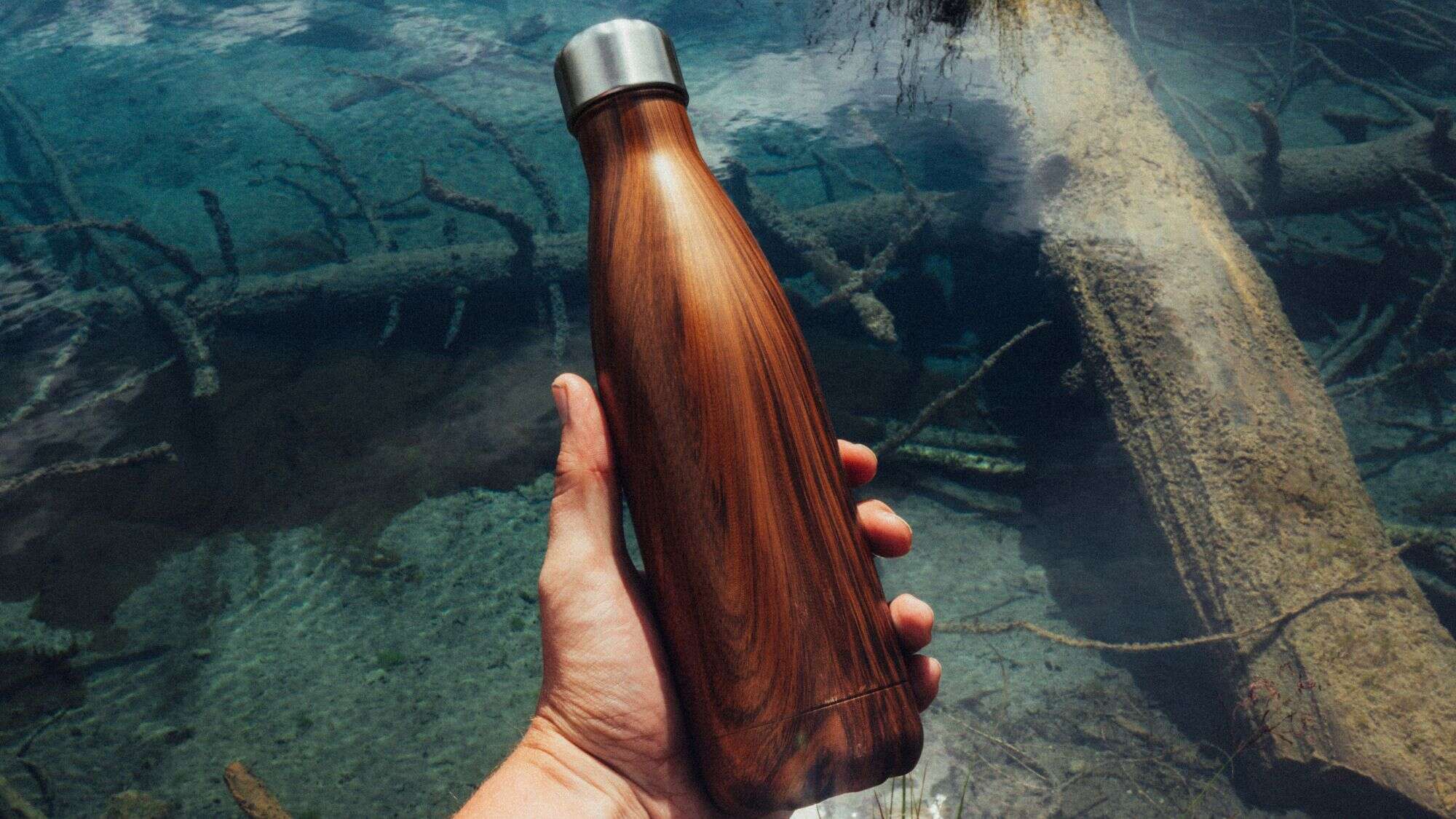
Buying bottled water at the airport or in tourist-heavy city centers is an unnecessary expense that adds up quickly, often costing upwards of $5 for a single bottle.
Carrying a refillable water bottle instead is one of the easiest ways to save money and stay hydrated, which is essential for warding off travel fatigue and headaches.
TSA regulations allow you to bring a water bottle through security as long as it is empty, and most modern airports now provide filtered hydration stations specifically for filling them up before your flight.
From an environmental perspective, the impact is also massive. It is estimated that humans buy about one million plastic bottles per minute globally, and a huge percentage of these end up in landfills or oceans.
By using a durable stainless steel or BPA-free plastic bottle, you keep disposable plastic out of the waste stream.
Plus, many insulated bottles can keep water ice-cold for 24 hours or coffee hot for 12 hours, a feature that single-use plastic bottles simply cannot match.
Whether you are hiking in a national park or navigating a sweltering city, having your own supply of temperature-controlled water is a small luxury that makes a big difference.
Personal Water Filter

While a refillable bottle is great, it relies on having access to safe tap water, which isn’t a guarantee in many parts of the world. In destinations where tap water may contain bacteria, protozoa, or parasites, a personal water filter is a critical safety tool.
Devices like filter straws or bottles with built-in filtration systems use hollow fiber membrane technology with a pore size of 0.2 microns. This is small enough to physically trap 99.9999% of bacteria like Salmonella and E. coli, as well as protozoa like Giardia, making questionable water safe to drink instantly.
Using a personal filter opens up options for travelers who might otherwise rely solely on bottled water, which can be scarce or expensive in remote areas.
For hikers and campers, this means you can drink directly from streams or lakes without needing to boil water or wait for chemical tablets to work.
These filters typically have a long lifespan, with some capable of filtering up to 1,000 gallons of water before needing replacement, providing peace of mind for years of adventures.
Hand Warmers

Cold hands can make even the most beautiful winter destination feel miserable, as the body pulls blood away from extremities to keep the core warm.
Rechargeable electric hand warmers are a massive upgrade from the disposable chemical packets that only last a few hours and generate waste.
These gadgets typically offer adjustable heat settings, with some models capable of reaching temperatures up to 130°F, providing immediate relief in freezing conditions.
A quality rechargeable warmer can also provide consistent heat for 4 to 8 hours, depending on the setting, getting you through a full day of sightseeing or skiing.
Another benefit of electric hand warmers is that many of them double as portable power banks. If your phone battery starts to die in the cold (a common issue since lithium-ion batteries drain faster in low temperatures), you can use your hand warmer to top it up. This dual functionality saves space in your pocket or bag.
They are safer than lighter-fluid warmers and more reliable than disposables, making them an essential companion for viewing the northern lights, exploring European Christmas markets, or just surviving a chilly airplane cabin.
Portable Neck Warmer

Scarves can be bulky and difficult to manage, often unraveling or getting caught on things when you are moving around.
A portable neck warmer, or gaiter, offers a streamlined alternative that seals in heat more effectively by sitting flush against your skin.
Made from materials like merino wool or fleece, these warmers trap the warm air rising from your body, preventing it from escaping and keeping your carotid arteries warm, which helps maintain your overall body temperature.
Because they are a continuous loop, they won’t blow away in strong winds, which is a common annoyance with traditional scarves.
These accessories are incredibly versatile and can often be pulled up to cover your nose and mouth, acting as a face mask against biting wind or dust. And they are lightweight and compress down to the size of a pair of socks, making them easy to stash in a jacket pocket when you step indoors.
For active travelers, moisture-wicking synthetic gaiters are ideal because they keep you warm without causing you to overheat or get sweaty during a hike.
Portable Handheld Fan

Heat and humidity can be physically draining, especially when you are standing in long lines at theme parks or waiting for public transport in a city without air conditioning.
A portable handheld fan provides personal climate control that can help prevent overheating and keep your makeup or sunscreen from melting off your face.
Modern handheld fans are surprisingly powerful, with some models featuring brushless motors that can generate wind speeds equivalent to 10 to 15 miles per hour. This direct airflow aids in evaporative cooling, which is the body’s natural way of regulating temperature.
Many of these fans are rechargeable via USB and come with battery capacities around 2000mAh to 4000mAh, allowing them to run for 10 hours or more on lower settings.
Some designs are even foldable, allowing you to prop them up on a tray table during a stuffy flight or on a nightstand in a warm hotel room.
Having a breeze on command can be the saving grace that keeps you energized when the mercury rises.
Headlamps

A flashlight is useful, but a headlamp is superior for travel because it allows you to operate completely hands-free. Whether you are digging through a dark suitcase in a hostel dorm, navigating a poorly lit street, or reading a book on a night bus, a headlamp directs light exactly where you are looking.
Most travel-friendly headlamps offer brightness levels ranging from 200 to 500 lumens, which is powerful enough to illuminate a trail but adjustable for close-up tasks.
This versatility makes them safer and more convenient than relying on your phone’s flashlight, which drains your communication battery. They are also incredibly compact and lightweight, often weighing less than three ounces with batteries included.
A crucial feature to look for is a red light mode. Red light does not cause your pupils to constrict the way white light does, meaning it preserves your night vision and is less disturbing to people sleeping around you.
This is polite and practical when you need to use the restroom in the middle of the night without waking your travel partner.
Keeping one in your daypack ensures you are never caught off guard when the sun goes down or the power goes out.
Cruise-Approved Power Strip

Hotel rooms and cruise ship cabins are notorious for having too few electrical outlets, and they are rarely located where you need them. With cameras, phones, watches, and tablets to charge, a single outlet simply isn’t enough for the modern traveler.
A power strip expands your charging capacity, but you must be careful about which one you pack.
Cruise lines strictly prohibit surge protectors because the electrical systems on ships differ from those on land, and using a surge protector can interfere with the ship’s grounding, posing a serious fire hazard.
To stay safe and compliant, you need a non-surge-protected power strip. These devices simply split the power without the extra circuitry found in home surge protectors.
Many travel-specific models come with three or four standard outlets plus several USB ports, allowing you to charge up to six devices from a single wall socket. They are often designed with a compact, wrap-around cord to prevent tangling.
Bringing one of these ensures you won’t have to argue with your travel companions over who gets to charge their phone first, and it prevents your gear from being confiscated by ship security.
Portable Power Bank Charger

Our dependence on smartphones for maps, translation, tickets, and payments means a dead battery can be a genuine travel emergency. A high-capacity portable power bank is the safety net that keeps you connected.
The TSA limits lithium-ion batteries in carry-on luggage to 100 watt-hours (Wh), which is roughly equivalent to 27,000 mAh. A power bank of this size can charge a standard smartphone five to seven times, providing enough power to get you through several days of heavy usage away from a wall outlet.
Speed is just as important as capacity. Look for a charger that supports Power Delivery (PD) or Quick Charge technology with an output of at least 18W.
This allows you to boost your battery from 0% to 50% in about 30 minutes, giving you hours of use from a short charging session during a lunch break.
Some power banks also offer wireless charging, so you don’t even need a cable, though this is generally slower.
Portable Safe

Theft is a crime of opportunity, and travelers are often targeted because they carry valuables like passports, cash, and electronics.
A portable travel safe is a slash-resistant, lockable bag that acts as a deterrent against “smash and grab” theft in hotel rooms, trains, or by the pool.
These “safes” are usually made from heavy-duty canvas reinforced with a steel wire mesh, making them extremely difficult to cut open with a knife. The locking mechanism typically involves a high-tensile steel cable that you can wrap around a fixed object, such as a bed frame, radiator, or pool chair.
Using a portable safe gives you peace of mind when your accommodation doesn’t provide a secure room safe (or when you simply don’t trust the one provided).
They come in various sizes, but a 5-liter or 12-liter model is usually sufficient to hold an iPad, camera, passport, and wallet. And it lies flat in your suitcase when empty, taking up very little room.
By securing your most critical items, you reduce the risk of a disastrous loss that could derail your entire trip, allowing you to explore with confidence, knowing your essentials are locked down.
Like Our Content? Follow Us On MSN (or click the Follow Button above) to see more from us.