Found By Accident contains affiliate links and is a member of the Amazon Services LLC Associates Program. If you make a purchase using one of the Amazon links (or other affiliate links), we may receive compensation at no extra cost to you. See our disclosure policy for more information.
14 Colorful And Unexpected Things That Show Why Curacao Is So Hard To Resist
Curacao often sits quietly in the conversation about Caribbean travel, waiting for you to look past the usual suspects. While other islands build their reputation on endless rows of identical resorts, this Dutch Caribbean destination has built its identity on something far more substantial.
It is an island of striking contrasts, where European history blends effortlessly with island ease, and where the landscape shifts dramatically from arid desert terrain to vibrant, hidden coves.
Choosing where to spend your vacation days is always a balancing act between relaxation and discovery. You want the guarantee of good weather and warm water, but you also want the feeling that you are somewhere real, somewhere that exists for more than just tourism.
This island manages to thread that needle perfectly. It offers the reliability of year-round sun thanks to its fortunate geography, but it also rewards those who are willing to rent a car and drive beyond the city limits.
So if you’ve been searching for a destination that offers more than just a beach chair, these insights will show you exactly why this southern gem deserves the top spot on your travel list.
Klein Curacao

If you have ever wanted to visit a deserted island, Klein Curacao offers exactly that experience, just 15 miles southeast of the main island.
This small, uninhabited cay is a flat strip of volcanic rock and sand that feels completely removed from the rest of the world. You can reach it by taking a boat charter, which typically takes about two hours, depending on sea conditions.
Once you arrive, the first thing you will notice is the blindingly white sand contrasting with the turquoise water. It is pristine, quiet, and devoid of permanent residents or hotels.
The island is home to an iconic, abandoned pink lighthouse that sits in the center of the landmass. This structure dates back to 1877 and, while the interior is crumbling and not safe to climb, the exterior provides a striking, somewhat haunting backdrop for photography.
Walking further inland, you will encounter the rusting wreck of the oil tanker Maria Bianca Guidesman, which ran aground in the 1980s. The metal has been twisted by years of salt spray and storms, creating a stark reminder of nature’s power.
Plus, you can’t miss the dipping into the waters surrounding Klein Curacao. They are teeming with marine life, specifically green sea turtles. They graze on the seagrass just a few feet from the shore, and because the water is so calm, you can swim alongside them with ease.
Willemstad’s Colorful Architecture

The capital city of Willemstad provides one of the most recognizable waterfront views in the entire Caribbean. The Handelskade is a stretch of buildings lining St. Anna Bay, famous for its vibrant colonial Dutch architecture painted in shades of mango, guava, and lime.
This unique aesthetic is not just a random design choice, but holds a fascinating history. Legend states that in the early 19th century, Governor Albert Kikkert complained that the glare from the white buildings gave him migraines. He ordered the citizens to paint their structures in any color other than white to ease his eyes.
Today, this colorful tradition defines the city’s character and contributes to its status as a UNESCO World Heritage site.
Walk across Queen Emma Bridge, a floating pontoon bridge that connects the Punda and Otrobanda districts. Locals affectionately call it the “Swinging Old Lady” because it swings open laterally to let ships enter the harbor.
When the bridge is open, a free ferry service shuttles pedestrians back and forth, offering a different perspective of the candy-colored skyline from the water.
Incredible Snorkeling And Diving Spots

The underwater landscape surrounding the island is celebrated globally, featuring over 65 distinct sites for snorkeling and scuba exploration. And unlike many other destinations where you need a boat to reach the best reefs, Curacao is famous for its accessible shore access.
You can literally park your car, put on your gear, and walk directly into the water to find thriving coral gardens just a few yards from the beach. This freedom allows you to explore at your own pace without adhering to strict boat schedules or crowded tours.
The visibility is often excellent, frequently exceeding 100 feet, which makes spotting marine life incredibly easy even for beginners.
One of the most famous locations is Mushroom Forest, named for the mountainous star coral formations that have grown to resemble giant mushrooms. Marine life hides underneath these coral caps, and you might spot nurse sharks sleeping or moray eels peering out from crevices.
Another must-visit site is Tugboat Beach, where a small tugboat sank roughly 30 years ago. It sits in shallow water, only about 15 feet deep, making it perfect for snorkelers. The wreck is now covered in tube sponges and brain coral, and surrounded by schools of blue tangs and yellowtail snapper.
Year-Round Perfect Weather

One of the strongest arguments for booking a trip here is the consistent and reliable climate. The island enjoys an arid, semi-desert climate with an average daily temperature of 80°F.
Another benefit is that it is located outside the traditional hurricane belt, so you do not need to obsessively check storm trackers if you plan a trip between June and November. While rain does fall, it typically comes in short, sharp showers during the night or early morning between October and February, leaving the rest of the day bright and sunny.
This stability makes it an ideal destination for planning weddings or big outdoor events where the weather can often be a stress factor.
The heat is kept manageable by the constant trade winds, known locally as the passat winds, which blow from the east. These breezes act as natural air conditioning, making it comfortable to sit on a beach or dine outdoors even during the hottest part of the day.
However, the wind can be deceptive, so you should always apply high-SPF sunscreen even if you feel cool.
Shete Boka National Park

For a dramatic change of scenery, head to the north coast of the island to visit Shete Boka National Park. The name translates to “Seven Inlets,” referring to the series of coves carved into the limestone coastline by the relentless pounding of the sea.
This area covers roughly six miles of rugged shoreline and offers a stark contrast to the calm beaches on the south side. The ocean here is wild and powerful, with waves crashing against the cliffs and shooting water high into the air.
At Boka Tabla, you can walk down steps carved into the rock to enter a cavern where the waves thunder in, creating a mesmerizing and booming spectacle. You must be careful on the slippery rocks, but the view from inside the cave, looking out at the churning ocean, is unforgettable.
Hiking trails connect the different bokas, allowing you to walk along the limestone bluffs and enjoy panoramic views of the coastline. So bring sturdy shoes, as the terrain is sharp volcanic rock.
The park is also a critical nesting ground for three species of sea turtles: the hawksbill, loggerhead, and green turtle. During the nesting season, usually from May to December, park rangers monitor the sites closely.
Vibrant Local Festivals

The cultural calendar here is packed with events that showcase the island’s rich heritage and love for celebration.
The biggest and most famous event is Carnival, which takes place in January and February. It is a marathon of street parties, parades, and music competitions that engage the entire population.
The festivities culminate in the Gran Marcha, a massive parade featuring elaborate costumes with feathers, sequins, and bright colors, where thousands of participants dance through the streets of Willemstad. The energy is infectious, fueled by the rhythmic beat of Tumba music (a genre indigenous to the island).
Another significant cultural event is the Seu Harvest Festival, held traditionally on Easter Monday. This folklore parade celebrates the island’s agricultural history and gives thanks for the harvest.
More than 2,000 locals dress in traditional costumes and parade through the streets carrying baskets of fruit and vegetables. You will see intricate choreography and hear traditional instruments like the chapi (a garden hoe played with a metal rod) and the karko (a conch shell horn).
Attending festivals like these gives you a deeper understanding of the local spirit and provides a chance to party alongside residents in a truly authentic way.
Thrilling Adventure Activities

If lounging on the sand is not your style, there are plenty of adrenaline-pumping options to keep you occupied.
The rugged terrain of the island’s east side is perfect for off-road exploration. You can book an ATV or buggy tour that takes you through the desert landscape, kicking up dust as you navigate rocky paths and visit hidden caves.
These tours often stop at the Ostrich Farm, one of the largest outside of Africa, where you can feed these massive birds and learn about their habits.
Hiking enthusiasts should tackle Christoffel Mountain, the highest point on the island, standing at 1,227 feet. It is located within Christoffel National Park, the largest national park on the island.
The hike is challenging and involves some rock scrambling near the summit, so park authorities require you to start early in the morning, typically before 10:00 AM, to avoid the midday heat. But the reward for your effort is a 360-degree view of the entire island and the surrounding sea.
For a different kind of thrill, visit the Hato Caves, which were formed millions of years ago below sea level. You can take a guided tour to see impressive limestone stalactites and stalagmites, as well as ancient petroglyphs left by the Arawak Indians more than 1,500 years ago.
Unique Wildlife
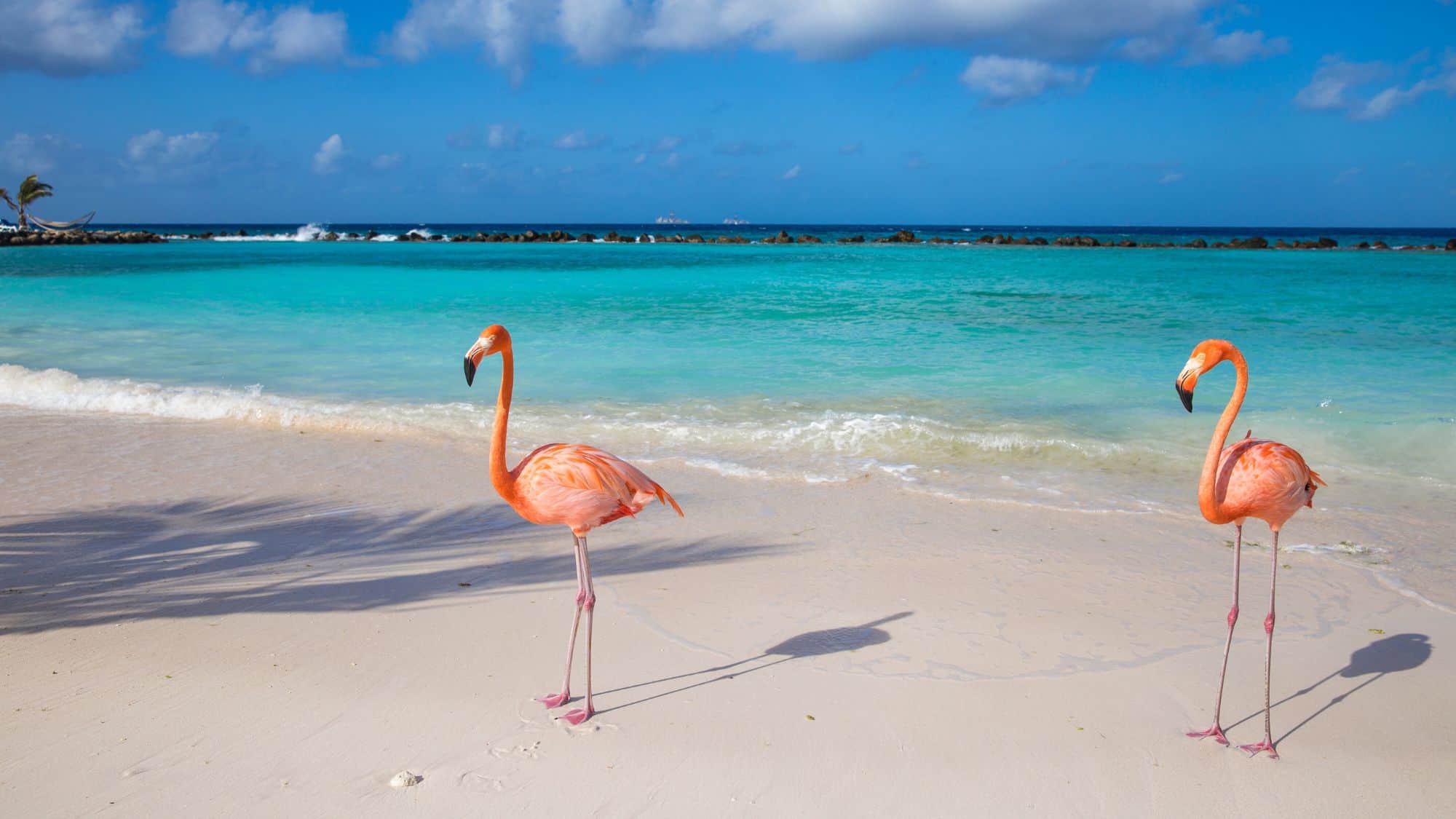
Animal lovers will find surprising encounters on land and in the air that go beyond the typical marine life.
The Curacao white-tailed deer, or “binu” in Papiamentu, is a distinct subspecies found only on this island. There are only a few hundred of them left in the wild, mostly residing in Christoffel National Park.
They are elusive and shy, so spotting one during a quiet morning hike is a special and rare experience. These deer are protected, and conservation efforts are ongoing to ensure their population remains stable despite habitat challenges.
Another splash of color in the landscape comes from the Caribbean flamingos. You can find large colonies of these pink birds at the salt flats of Jan Thiel and Sint Willibrordus. The flamingos wade in the shallow, salty water to feed on brine shrimp, which gives them their vibrant pink feathers.
At Sint Willibrordus, there is a viewing area called the Flamingo Sanctuary where you can observe them from a distance without disturbing their natural behavior.
The island is also home to the troupial, a bright orange and black bird that is often seen in hotel gardens and wild bush alike. Their distinct call and striking colors make them a favorite subject for birdwatchers and photographers.
Unparalleled Shopping Experiences

Shopping here offers more than just typical souvenir trinkets; it is a chance to explore historic districts and find international brands alongside local crafts.
The Punda district is the commercial heart of Willemstad, where pedestrian-only streets are lined with duty-free shops selling jewelry, electronics, and perfumes. Penha, housed in one of the most photographed colonial buildings on the Handelskade, is a flagship store dating back to 1708.
For a blend of history and commerce, visit Rif Fort in the Otrobanda district. This fortress was originally built in 1828 to protect the harbor but has been transformed into an upscale shopping and dining complex.
You can shop for high-end clothing and accessories within the thick coral walls that once defended the city from pirates.
If you are looking for local flavor, seek out the “chichi dolls.” These curvaceous, Caribbean sculptures are painted by local women and represent the eldest sister in the family, a figure of care and responsibility. They come in various sizes and colorful patterns, making for a meaningful keepsake.
Curacao’s Blue Room

The Blue Room offers one of the most surreal aquatic experiences you can find in the Caribbean without needing scuba certification. It is an underwater cave located near Santa Cruz on the west side of the island.
You can reach the Blue Room by hiking a narrow path from Playa Santa Cruz, which takes about 20 minutes, or by taking a water taxi or canoe tour.
The entrance is partially submerged, meaning you have to swim under a rocky ledge to get inside. Once you enter the cavern, the sunlight reflecting off the white sandy bottom illuminates the entire space in an ethereal, glowing blue light.
It creates a magical effect that makes you feel like you are swimming inside a sapphire.
The water inside is usually calm, allowing you to float and admire the schools of fish that seek shelter in the shadows. It is best to visit around midday when the sun is directly overhead, as this maximizes the intensity of the blue light effect.
Because it is an enclosed space, the acoustics amplify the sound of the water lapping against the cave walls, adding to the sensory experience.
Delicious Local Cuisine

The food culture here is a hearty reflection of the island’s multicultural roots, blending Dutch, Afro-Caribbean, and Latin American influences.
To taste authentic local dishes, you should head to Plasa Bieu in Willemstad. This old market building has been converted into a food court where vendors cook traditional meals over charcoal fires in open kitchens.
It is loud, hot, and smells incredible. You sit at long communal tables, often shoulder-to-shoulder with office workers on their lunch break, which is the best stamp of approval for the food’s quality.
One dish you must try is keshi yena, considered the national dish of Curacao. It consists of a hollowed-out round of Edam or Gouda cheese stuffed with spiced meat (usually chicken or beef), raisins, olives, and capers, then baked until gooey and melted. It is a savory-sweet combination that is rich and satisfying.
Another staple is stoba, a hearty stew made with goat (kabritu) or beef, simmered for hours until the meat is tender. And for a snack on the go, look for pastechi, a fried crescent-shaped pastry filled with cheese, meat, or fish. It is the island’s version of an empanada and is perfect for a quick breakfast.
Blue Curacao Liqueur

You cannot visit this island without encountering its most famous export: blue curacao liqueur. While you can buy this blue bottle anywhere in the world, tasting it at the source provides a history lesson alongside the cocktail.
The liqueur is made from the dried peels of the laraha citrus fruit. The laraha is a descendant of the Valencia orange brought over by Spanish explorers, but the island’s soil and climate turned the fruit bitter and inedible.
However, locals discovered that the peels contained a fragrant oil that was perfect for distillation.
Visit Landhuis Chobolobo, a 19th-century mansion that houses the Senior & Co. distillery. They have been producing the liqueur using the same copper pot stills since 1896.
You can take a guided tour to see the production process and learn how they hand-cut the peels with wooden knives to avoid staining the flavor. The tour ends with a tasting where you can sample different variations, including chocolate and coffee flavors, though the original blue remains the iconic choice.
Interestingly, the liqueur is naturally clear; the vibrant blue color is added purely for cosmetic reasons to evoke the color of the sea.
Stunning Sunsets

The western coastline creates the perfect stage for spectacular sunsets that draw crowds every evening. And because the island is long and narrow, there are numerous beaches facing directly west, offering unobstructed views of the sun dipping below the horizon.
One of the prime locations is Grote Knip, also known as Kenepa Grandi. The beach is framed by high cliffs, and as the sun sets, the water glows in shades of gold and violet. It is a popular spot for locals to gather with coolers and music to end the day.
If you are lucky and watch closely, you might witness the “green flash,” an optical phenomenon that occurs just as the upper rim of the sun disappears, creating a brief emerald spot of light.
Photographers also flock to spots like Playa Forti, where you can watch the sunset from the top of a cliff while enjoying a meal at the restaurant perched on the edge. And many charter boats offer sunset sails, allowing you to watch the display from the water while enjoying drinks and appetizers.
Lively Beach Clubs

While the north is rugged and the west is laid-back, the area south of Willemstad offers a sophisticated beach club scene perfect for social travelers.
Mambo Beach Boulevard is a two-level strip of shops, restaurants, and bars right on the sand. It is a hub of activity where you can rent a luxury beach bed for the day and enjoy waiter service right to your lounger.
As the afternoon fades, the music volume goes up, and the area transitions into a nightlife hotspot.
Jan Thiel Beach is another upscale area known for its chic vibe and high-end amenities. Here you will find spots like Zest and Zanzibar, which offer distinct atmospheres ranging from Mediterranean dining to barefoot casual. Saturday evenings at Zanzibar are famous for their happy hours, often featuring live bands and buckets of beer.
These clubs provide a comfortable way to enjoy the beach with access to showers, Wi-Fi, and quality food. And it is the place to be if you want to mix sunbathing with socializing, offering a lively contrast to the secluded coves found elsewhere on the island.
Like Our Content? Follow Us On MSN (or click the Follow Button above) to see more from Traveling In Focus.