
Found By Accident contains affiliate links and is a member of the Amazon Services LLC Associates Program. If you make a purchase using one of the Amazon links (or other affiliate links), we may receive compensation at no extra cost to you. See our disclosure policy for more information.
16 Scottish Haunts That Are So Disturbing, You’ll Think Twice Before Visiting
There is something deeply unsettling about the Scottish landscape when the weather turns. The mist clings to the glens like a damp sheet that someone forgot to put in the dryer, and the ancient stone circles seem to hum with a low frequency that makes the hair on your arms stand up.
Scotland does not just have history; it has a memory. It remembers every battle, every betrayal, and every broken heart, locking them away in the granite of its castles and the cobblestones of its cities. And the atmosphere shifts the moment the sun dips behind the hills.
Shadows stretch longer than they should, and the silence in the highlands feels heavy, almost expectant. It is the kind of quiet that makes you check over your shoulder even though you know perfectly well you are alone.
Tales of the supernatural here are not just stories told to scare children; they are woven into the very fabric of the culture. Locals speak of spectral pipers and weeping ladies with a casual familiarity that is both charming and mildly alarming. Turns out, you do not need to hunt for ghosts in this part of the world because usually, they are the ones watching you.
Let’s take a look at some of the most haunted places across Scotland.
Edinburgh Castle

Perched atop a jagged volcanic rock that looks like it was designed by a villain in a novel, Edinburgh Castle dominates the city skyline with an imposing gloom. It has been a royal residence, a military garrison, and a prison, which basically creates the perfect trifecta for restless spirits.
With over 900 years of history, it is statistically impossible for this place not to be haunted.
The castle is home to a headless drummer who was first reported in 1650. According to legend, he only appears when the castle is about to be attacked, which must have been helpful for the guards, albeit terrifying. You have to wonder if he just wanders around bored during times of peace or takes up a different hobby.
Then there is the tragic tale of the lost piper. Hundreds of years ago, tunnels were discovered running from the castle down to the Royal Mile. A piper was sent down to play his pipes so those above could track his progress.
The music stopped abruptly halfway down the mile, and despite rescue parties being sent in, the boy was never found. Visitors today often claim to hear the faint sound of bagpipes coming from deep underground near the castle entrance. It is enough to make you walk a little faster.
The castle dungeons are another hotspot for paranormal activity, where a phenomenon known as the Shadow Man has been spotted by tourists and staff alike. People frequently report sudden drops in temperature and the feeling of being touched by unseen hands (which is frankly rude behavior for a ghost if you ask me).
Real Mary King’s Close

Real Mary King’s Close was once a bustling center of trade in the 1600s, but it was partially sealed off and built over when the City Chambers were constructed in the 18th century. It is a suffocating labyrinth of preserved rooms and alleyways where the darkness feels physical.
The Close was hit particularly hard during the plague outbreak of 1645, and the stories of suffering here are grim. It was rumored that plague victims were bricked up inside their homes to contain the disease, though historians argue this is a myth.
Still, walking through the low-ceilinged rooms, you can almost smell the desperation and sickness that once permeated the air.
The most famous resident is a little girl named Annie. In the 1990s, a Japanese psychic visited the Close and claimed to feel a terrible sadness in one of the rooms. She said it was the spirit of a child who had lost her favorite doll.
Since then, visitors have left thousands of dolls and toys in a pile that is now genuinely creepy to behold. It is a shrine to a ghost child, which is sweet but also the stuff of nightmares.
Another spectral figure known as Mr. Chesney, the last resident to leave the Close before it was sealed, is said to haunt the area. Staff members have reported hearing footsteps following them when they lock up at night.
Cawdor Castle

This 14th-century fortress is perhaps best known for its literary connection to Shakespeare’s Macbeth, even though the real King Macbeth died long before the castle was actually built. Don’t let facts ruin a good story, though.
Cawdor Castle is built around a legendary holly tree, which you can still see in the dungeon today. Legend says the then-Thane of Cawdor dreamt he should load a donkey with gold and build a castle wherever the animal lay down to rest.
The donkey chose a tree, so they built the castle right over it. It seems like a structural nightmare, but the tree has been there since 1372 (clearly, the donkey knew something about architecture).
The castle is famously haunted by a ghost in a blue velvet dress. She is believed to be Muriel Calder, an heiress who was kidnapped as a child in the 16th century to secure her family’s claim to the estate.
Another version of the story suggests the ghost is the daughter of a past Earl who discovered she was flirting with a rival clan member. In a fit of rage, he chased her to the highest tower and pushed her out of the window. Some visitors have reported seeing a figure falling from the tower, only to vanish before hitting the ground.
Stirling Castle

Stirling Castle sits on a crag with a sheer drop that makes your stomach do a flip just looking at it. It is one of Scotland’s most important fortifications and was a favorite residence of the Stewart kings and queens.
The views of the Highlands are spectacular (assuming the mist clears up enough to see anything).
The castle is famously the home of the Green Lady, who is thought to be a servant of Mary, Queen of Scots. The story goes that she watched over the Queen during a fire in her bedchamber and saved her life, but died from her injuries. It is said she wanders the castle looking for her mistress, which is a level of dedication most employers can only dream of.
Another spectral resident is the Pink Lady. She is often seen walking from the castle to the nearby Church of the Holy Rude. Some say she is a widow searching for her husband, who died in battle, identified by the faint scent of rose blossoms that accompanies her. It is a surprisingly pleasant smell for a haunting.
In the 1930s, an architect recorded strange footsteps in the Governor’s Block that he could not explain. The footsteps were heavy and purposeful, sounding like boots on stone. Guards at the castle have also reported unexplained noises and shadows moving in the Great Hall.
It is a beautiful place to visit, but you get the distinct feeling that the previous tenants never really handed back the keys.
Glamis Castle

If there were a competition for the most haunted building in Scotland, Glamis Castle would be taking home the gold medal.
It is the childhood home of the late Queen Mother and the setting for Shakespeare’s Macbeth, but its real history is far darker. The castle hides a secret room that has never been found.
Legend says that a deformed child, the rightful heir known as the Monster of Glamis, was walled up alive in this room in the 19th century. Guests have reported counting the windows from the outside and finding two fewer when counting from the inside. It is enough to make you start tapping on the walls, though you probably won’t like what you find.
Then there is Earl Beardie. He was a nobleman who loved gambling so much that he allegedly played cards with the Devil himself. The story claims he shouted that he would play until Doomsday, and the Devil obliged, trapping his soul in the castle forever. Guests have reported hearing shouting, swearing, and the rattling of dice coming from empty rooms late at night.
The Grey Lady is another regular, believed to be the spirit of Lady Janet Douglas. She was burned at the stake for witchcraft in 1537 on trumped-up charges by King James V. She is often seen in the family chapel or sitting in the chair that nobody is allowed to use.
Inveraray Castle

Located on the shores of Loch Fyne, Inveraray Castle is the ancestral home of the Duke of Argyll and the headquarters of Clan Campbell. It is a stunning piece of Gothic Revival architecture that looks like it belongs on a postcard, but the inside has a bit of a gloomy vibe.
The castle is haunted by a young harpist who was murdered by the Duke of Montrose’s men in 1644. The boy’s bed is still in the MacArthur Room, and visitors have reported hearing the beautiful, melancholy sound of a harp being played when no one is there.
Honestly, it’s a nice change from the usual screaming and chain-rattling you get in other castles.
A more ominous legend involves the Ghost Ship of Loch Fyne. It is a spectral galley that appears on the horizon, resembling a ship from the 18th century. Legend says that the appearance of the ship signals the death of the Campbell chief. It was famously seen days before the death of a Duke in the early 20th century.
The library is another active spot, where books have been known to fly off the shelves, probably because the ghosts disagree with the filing system.
The sheer number of Campbell clan members who died in violent conflicts over the centuries has left a heavy imprint on the place. You can admire the tapestries, but try not to think too hard about who might be standing behind you.
Greyfriars Kirkyard

This graveyard in Edinburgh is famous for Greyfriars Bobby, the loyal dog who guarded his master’s grave, but the humans buried here are far less cuddly. In fact, it is widely considered one of the most haunted cemeteries in the world.
The trouble centers around the Black Mausoleum, the resting place of Sir George Mackenzie. He was a ruthless persecutor of the Scottish Covenanters in the 17th century and earned the nickname Bluidy Mackenzie.
In 1999, a homeless man broke into the mausoleum looking for shelter and accidentally fell into the burial chamber. Since then, the Mackenzie Poltergeist has been attacking visitors. People on tours frequently report being scratched, bitten, and knocked unconscious near the tomb. It is not just a feeling of unease; visitors leave with actual physical bruises and welts.
The Covenanters’ Prison, a section of the graveyard where Mackenzie imprisoned 1200 men in horrific conditions, is locked to the public except for authorized tours.
The irony that Mackenzie is buried just yards away from his victims is not lost on anyone. And the poltergeist activity is so well-documented that the City of Edinburgh Council labeled it a genuine phenomenon.
If you choose to visit, maybe keep your hands in your pockets and do not insult the architecture. Because it is the only graveyard where you might actually leave with a black eye.
Rosslyn Chapel

Rosslyn Chapel became globally famous after The Da Vinci Code, but its local reputation has always been eerie. Founded in 1446, the stone carvings inside are incredibly intricate and filled with symbolism that scholars are still arguing about.
The most famous ghost story here involves the Apprentice Pillar. The master mason left to travel abroad to learn how to carve a specific pillar design.
While he was gone, his apprentice had a dream about the design and carved it perfectly. When the master returned and saw the apprentice had outdone him, he killed the boy with a mallet in a fit of jealousy. Talk about a toxic workplace environment.
Visitors have reported seeing a young man wandering the chapel who vanishes when approached.
Another legend states that the chapel is protected by a spectral knight in armor who guards the crypts. The crypts themselves are sealed and have not been opened for centuries, fueling rumors about what they contain (be it the Holy Grail or the head of Jesus).
The chapel is also said to be engulfed in phantom flames when a Sinclair heir is about to die.
Crathes Castle
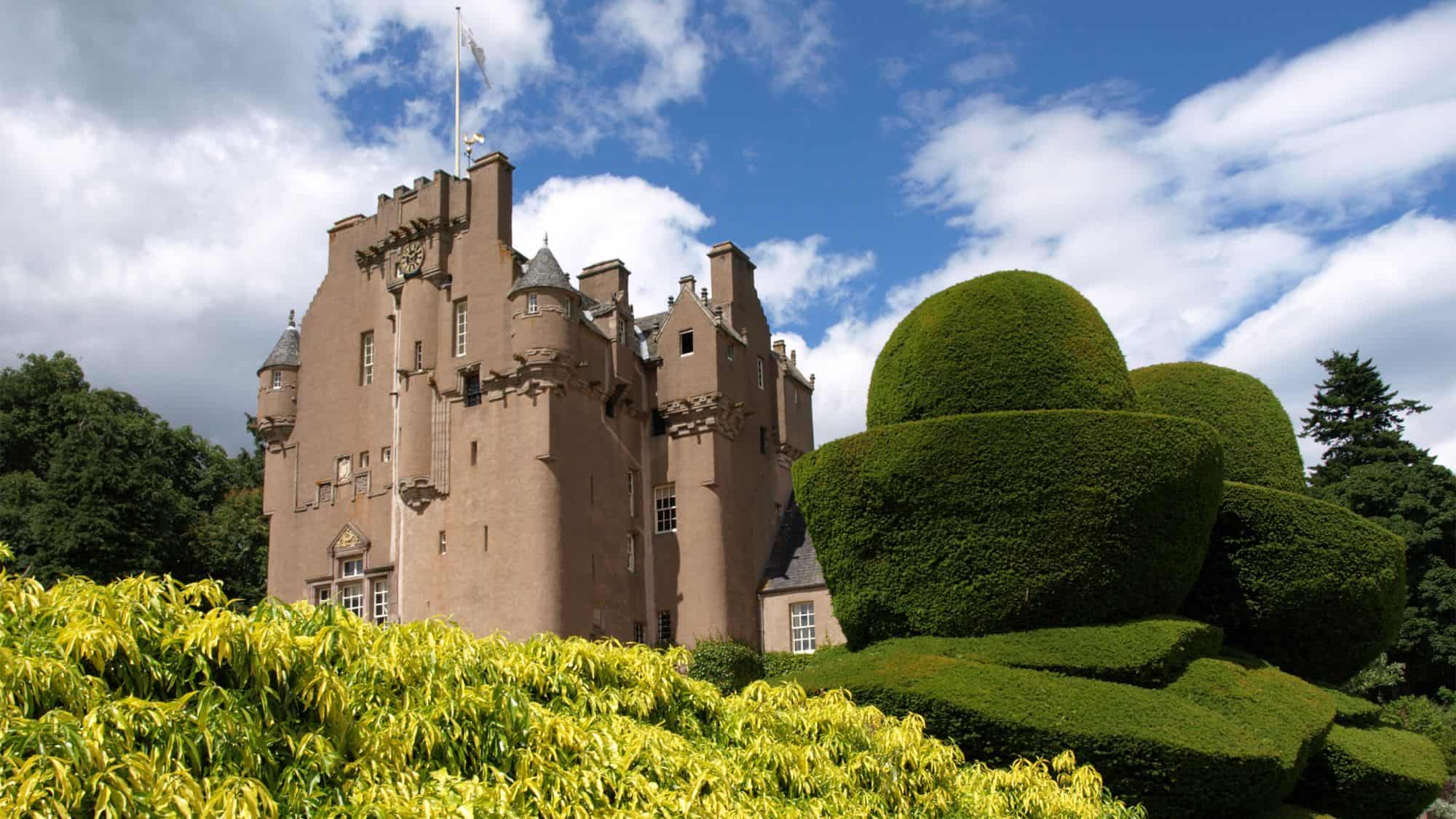
This 16th-century tower house in Aberdeenshire is classic Scottish fairytale material, complete with turrets and gargoyles. However, inside the castle, things get a bit darker.
The Green Lady of Crathes is a persistent spirit who haunts the Green Lady’s Room. She is often seen pacing back and forth by the fireplace, sometimes holding an infant in her arms. And this spooky legend took a grim turn in the 1800s when renovations were being done.
Workmen discovered the skeletal remains of a woman and a baby buried beneath the hearthstone of the fireplace. It was a gruesome confirmation of the ghost stories that had circulated for generations.
The identity of the Green Lady remains a mystery, though some speculate she was a servant girl who had a child out of wedlock with a castle resident and was disposed of to avoid scandal.
Queen Victoria even visited the castle and claimed to see the Green Lady, which gave the ghost a royal seal of approval.
Another spooky phenomenon reported here involves a mysterious floating ball of light that drifts through the corridors. So it might be best to visit during the day when the sun is shining.
Witchery By The Castle

While now a luxurious hotel and restaurant, the building known as The Witchery sits right at the gates of Edinburgh Castle on Castlehill. And the name is not just a clever marketing ploy.
During the 16th and 17th centuries, hundreds of women were burned at the stake on Castlehill for the crime of witchcraft. It was one of the darkest periods in Scottish history, and the ground here soaked up a lot of suffering.
The Witchery occupies a 16th-century merchant’s house, and the atmosphere is thick with gothic charm and shadows. It is the kind of place where the candlelight flickers even when there is no draft.
Guests have reported seeing a phantom soldier dining in the restaurant, only to disappear before the check arrives, which is honestly the oldest trick in the book. There are also tales of a gray lady who floats through the suites, perhaps one of the accused witches looking for justice. The Outhouse, a separate suite, is particularly known for strange noises and objects moving on their own.
It is an incredibly romantic spot, provided your date doesn’t mind sharing the table with the unseen victims of a witch hunt.
Skaill House

Located in the Orkney Islands, Skaill House overlooks the prehistoric village of Skara Brae. It was built in the 1620s by Bishop George Graham and stands on land that has been inhabited for 5,000 years.
During renovations in 1997, workers lifted the floorboards and discovered 15 skeletons. It turns out the house was built directly on top of a Pictish burial ground. Nothing says “haunted” quite like literally living on top of ancient graves, right?!
Visitors and staff have reported hearing footsteps in empty corridors and strange smells of cigarette smoke when no one is smoking.
The most famous ghost is a tall man with long dark hair, often seen in the Gun Room. He is believed to be the spirit of Ubby, a giant man who once rowed Bishop Graham around the islands.
In the Bishop’s Bedroom, guests have claimed to feel someone sitting on the edge of the bed, which is a terrifying way to wake up. And dogs often refuse to enter certain rooms in the house, stopping at the threshold and growling at nothing.
The isolation of the Orkney Islands adds to the eeriness. With the wind howling off the North Sea and the ancient ruins next door, Skaill House feels like it exists on the edge of the world.
Drovers Inn

This inn at the top of Loch Lomond has been welcoming travelers since 1705, and some of them apparently never left.
The Drovers Inn is famous for its collection of stuffed animals in the lobby, including a terrifying bear that greets you upon arrival. It sets the tone perfectly.
The most famous story involves Room 6. A young girl drowned in the nearby river in the late 19th century, and her body was brought to this room. Guests staying there have reported waking up to feel icy cold water dripping onto their faces or seeing a small girl standing at the foot of the bed.
Another ghost is George, a cattle drover who died nearby in a snowstorm. His body was brought to the inn, and he has been hanging around ever since. People claim to see him sitting in the bar, nursing a drink that isn’t there. There are also reports of glowing orbs in photographs taken in the main hallway.
The decor has remained largely unchanged for centuries, which helps the ghosts blend in. It is dark, dusty, and full of character. You might go for the live music and the haggis, but you will stay because your car won’t start, and you’re too scared to walk to the nearest town.
Fyvie Castle

Fyvie Castle in Aberdeenshire is a magnificent fortress with five towers, each named after one of the five families who owned it. It is also cursed.
Thomas the Rhymer, a legendary seer, supposedly placed a curse on the castle, claiming that the firstborn sons would never inherit. But the ghosts are the real draw.
The Green Lady of Fyvie is believed to be Lilias Drummond. Her husband, impatient for a son, starved her to death in 1601. On the night of his second marriage, scratching sounds were heard outside the bridal chamber window. In the morning, the name D LILIAS DRUMMOND was found carved into the stone sill, upside down. You can still see it today.
There is also a secret room in the castle that must never be opened. Legend says that a laird once opened it and found a skeleton, causing the laird to go blind and his wife to die. It is generally agreed that keeping the door shut is the best policy.
Another spirit, the Grey Lady, is thought to be a lady who was sealed in a wall after a betrayal. During renovations in 1920, skeletons were found behind a bedroom wall, which suggests that masonry was the preferred method of conflict resolution in the past.
Blackness Castle

Often called the “ship that never sails” because of its pointed shape jutting out into the Firth of Forth, Blackness Castle was built in the 15th century. It served as a state prison and an artillery fortification.
If you recognize it, that is probably because it was used as Fort William in the TV show Outlander, where Jamie Fraser was flogged.
But the real history is just as brutal. The castle dungeons are damp and grim, designed to wash out with the tide, which was a horrific way to keep prisoners. Visitors often report a feeling of overwhelming dread and nausea when entering the prison tower.
A ghostly knight in armor has been spotted patrolling the ramparts, perhaps still guarding against an English invasion. And sounds of heavy furniture being dragged across stone floors are frequently heard in empty rooms.
Paranormal investigators have even recorded strange electronic voice phenomena (EVP) here, with voices telling them to “get out.” It is a solid piece of advice that you might want to follow.
Ackergill Tower

Located in the far north of Caithness, Ackergill Tower stands on a remote coast that feels completely isolated from civilization. It dates back to the early 15th century and has a bloody history of clan feuds between the Gunns and the Keiths.
The resident ghost is Helen Gunn, known as the Beauty of Braemore. She was kidnapped by Dugald Keith on her wedding night and imprisoned in the tower.
To escape his advances, or perhaps out of sheer despair, she jumped (or fell) from the battlements to her death. Her spirit is seen wearing a long red ball gown, wandering the tower or standing on the grounds. A tree near the tower marks the spot where she fell, and locals say the grass never grows there.
In recent years, guests have reported knocking on their bedroom doors in the middle of the night, only to find the corridor empty. There is also a legend of a baby’s cry heard in the wing where a massacre of the Gunn clan allegedly took place.
The wind coming off the sea is fierce here, often masking the sounds of the supernatural, but the flashes of red in the corner of your eye are hard to ignore.
Banshee Labyrinth

This venue in Edinburgh claims to be Scotland’s most haunted pub, which is a bold title in a city full of them.
Banshee Labyrinth is located partially within the Niddry Street Vaults, which were once the slums of underground Edinburgh. The club is made up of seven rooms, all of them dark and cavernous.
The main ghost story involves the Banshee herself. During refurbishment, a group of workmen heard a blood-curdling scream. One of the workers received a phone call hours later, saying a family member had died. The Banshee is an omen of death, so hearing her is never a good sign.
Drinks have been known to fly off tables and smash against walls with no explanation. There is also a specific section known as “The Cage” where people have reported feeling hands grabbing at their ankles.
The atmosphere is deliberately spooky, with horror movie posters and dark lighting, but the cold spots in the back rooms feel very genuine.
The vaults were once home to the poorest of the poor and criminals, and the energy is frantic. It is a great place for a pint and listening to a live band, but you might find yourself checking under the table more often than usual.
Like Our Content? Follow Us On MSN (or click the Follow Button above) to see more from Traveling In Focus.