Found By Accident contains affiliate links and is a member of the Amazon Services LLC Associates Program. If you make a purchase using one of the Amazon links (or other affiliate links), we may receive compensation at no extra cost to you. See our disclosure policy for more information.
If Europe Is On Your Radar, These 11 Cities Deserve Your Attention In 2026
Europe often feels like a sprawling collection of stories waiting to be read, and the chapters are constantly changing. While the heavy hitters of tourism remain iconic for good reason, a shift is happening across the continent as travelers seek out deeper connections and fresher perspectives.
There is a palpable energy in cities that once sat quietly in the background, now stepping forward with vibrant art scenes, revitalized historic quarters, and culinary movements that rival the old guard. You can feel this momentum in the way neighborhoods are transforming, blending centuries of tradition with a modern, creative edge that feels entirely new.
Planning a trip for 2026 offers the perfect opportunity to look beyond the standard itinerary and find places where the crowds are thinner, but the experiences are richer.
It is about finding that sweet spot where history meets innovation, where you can wander through a medieval street in the morning and explore a cutting-edge design district by afternoon. Let’s take a look at some of the incredible options you should consider planning for this year.
Krakow, Poland

Krakow sits in southern Poland as a city that has masterfully balanced its deep, sometimes tragic history with a vibrant, youthful energy.
The Main Market Square, Rynek Glowny, anchors the Old Town and stands as the largest medieval town square in Europe, covering roughly 40,000 square feet. You can spend hours here just watching the world go by, but the real magic often happens below street level in the city’s famous cellar bars and jazz clubs.
These subterranean venues have been a staple of Krakow’s social life for decades, offering an intimate atmosphere that feels miles away from the busy streets above.
A short walk from the center takes you to Wawel Royal Castle, a sprawling complex that served as the residence of Polish kings for centuries.
The blend of Romanesque, Gothic, and Renaissance architecture here is striking, and the castle grounds offer sweeping views of the Vistula River. Admission to the castle grounds is free, allowing you to explore the exterior architecture and courtyards at your own pace without a ticket.
Kazimierz, the historic Jewish quarter, offers a different kind of history and is now the hub of Krakow’s artistic and culinary scene. Synagogues and cemeteries stand as solemn reminders of the past, while right next door, food trucks and street art festivals bring a modern pulse to the neighborhood.
Ljubljana, Slovenia
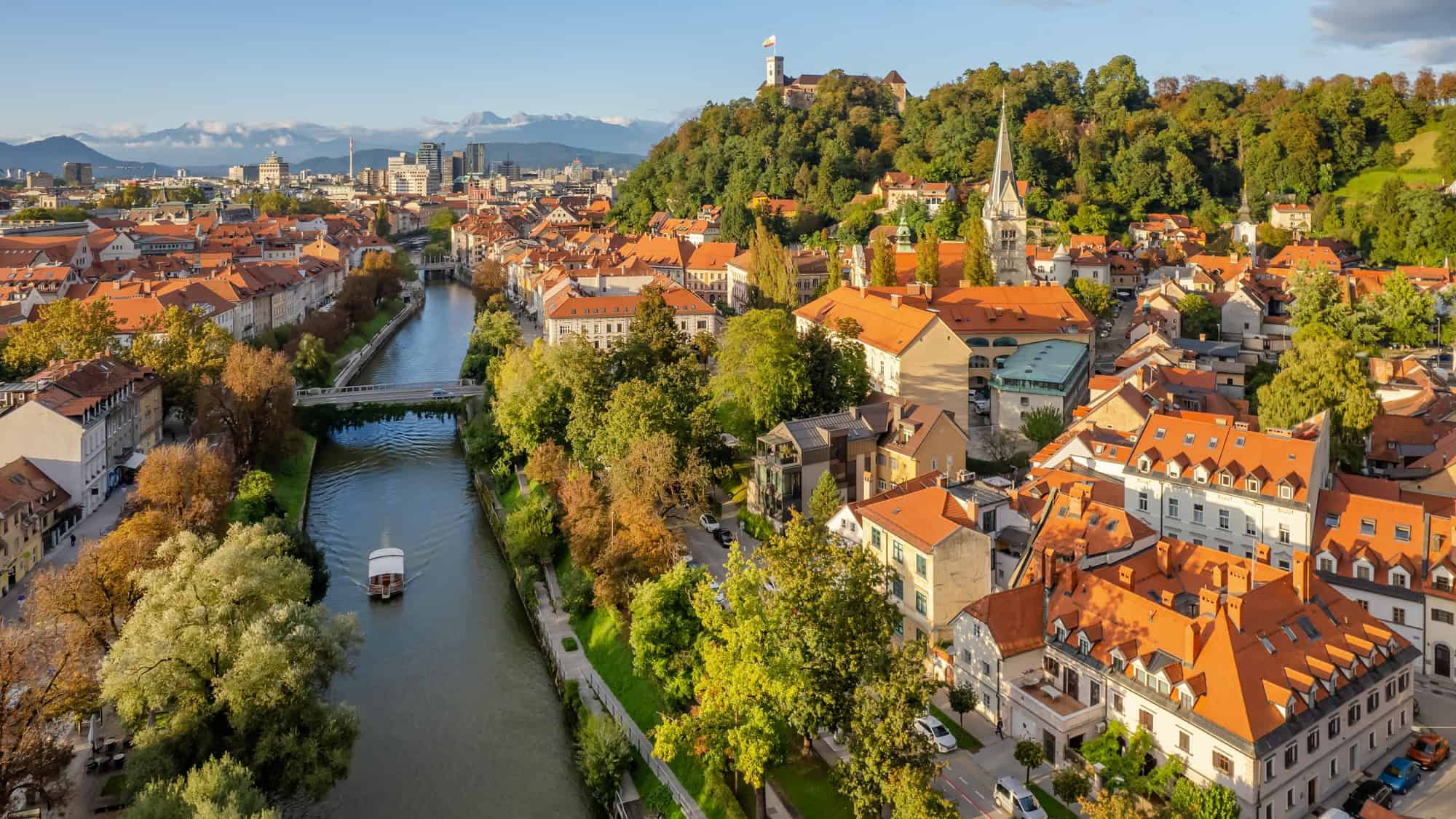
Ljubljana is often cited as one of Europe’s greenest capitals, a title it earned partly because the city center is completely closed to motorized traffic. This car-free zone transforms the heart of the city into a haven for pedestrians and cyclists, making the pace of life feel refreshingly slow and relaxed.
The Ljubljanica River winds its way through the middle of town, lined with weeping willows and cafes that stay full from morning coffee until late-night drinks.
Joze Plecnik, a celebrated architect, designed many of the city’s most famous landmarks, including the Triple Bridge and Central Market, giving Ljubljana a distinct and cohesive aesthetic that feels like an open-air museum.
You can take a funicular ride up to Ljubljana Castle, which watches over the city from a forested hill. The castle complex mixes medieval fortifications with modern glass and steel renovations, hosting everything from history exhibitions to open-air movie nights in the summer.
From the watchtower, you get a clear view of the Julian Alps in the distance, a reminder of how close nature is to this urban center. In fact, Slovenia is so forested that it ranks as the third most forested country in Europe, right after Finland and Sweden.
A short drive or bus ride from the capital puts you in the middle of pristine nature, but even staying within the city limits offers plenty of green space, like the expansive Tivoli Park.
Valencia, Spain

Valencia often flies under the radar compared to Barcelona or Madrid, but it offers a compelling mix of futuristic architecture and traditional Spanish charm.
The City of Arts and Sciences is the most visually striking example of this modernity, a massive cultural complex designed by Santiago Calatrava and Felix Candela.
It includes an opera house, a science museum, and L’Oceanografic, which is the largest aquarium in Europe and houses over 500 different marine species. Walking through this futuristic landscape feels like stepping onto a sci-fi movie set, with its stark white curves and reflecting pools creating a sharp contrast against the deep blue Mediterranean sky.
Despite this modern edge, Valencia remains deeply connected to its roots, most notably as the birthplace of paella.
You will find the most authentic versions of this dish not in the tourist center, but in the nearby Albufera Natural Park, where the rice for the dish is grown in the surrounding paddy fields. The park is a freshwater lagoon that provides a critical habitat for migratory birds and offers boat rides that are especially popular at sunset.
Back in the city center, Central Market (Mercado Central) is a cathedral of food, an Art Nouveau masterpiece packed with hundreds of stalls selling fresh local produce. It is one of the oldest running food markets in Europe, having been in operation since 1928, and it remains a vital part of daily life for locals.
Ghent, Belgium

Ghent feels like a well-kept secret, sitting quietly between the more famous tourist hubs of Brussels and Bruges. It possesses a gritty, authentic edge thanks to its large student population and a history as an industrial center, preventing it from feeling like a polished theme park.
The city center is dominated by the Three Towers of Ghent: Saint Nicholas’ Church, the Belfry, and Saint Bavo’s Cathedral.
The Belfry, a UNESCO World Heritage site, stands 300 feet tall and has watched over the city since the 14th century, symbolizing the city’s independence and prosperity. Inside Saint Bavo’s Cathedral, you can view the Mystic Lamb altarpiece, widely considered one of the most influential oil paintings in art history.
The Graslei and Korenlei quays run along the Leie River and serve as the city’s social living room. In the warmer months, locals dangle their legs over the canal walls, sharing drinks and conversation as boats drift by.
The architecture here is a stunning row of guildhalls, each with a unique facade that reflects the wealth of the medieval merchants who built them.
Ghent is also fiercely proud of its vegetarian culture, boasting the highest number of vegetarian restaurants per capita in the world. This is partly due to “Thursday Veggie Day,” a campaign encouraged by the city where residents are urged to eat meat-free once a week.
Porto, Portugal
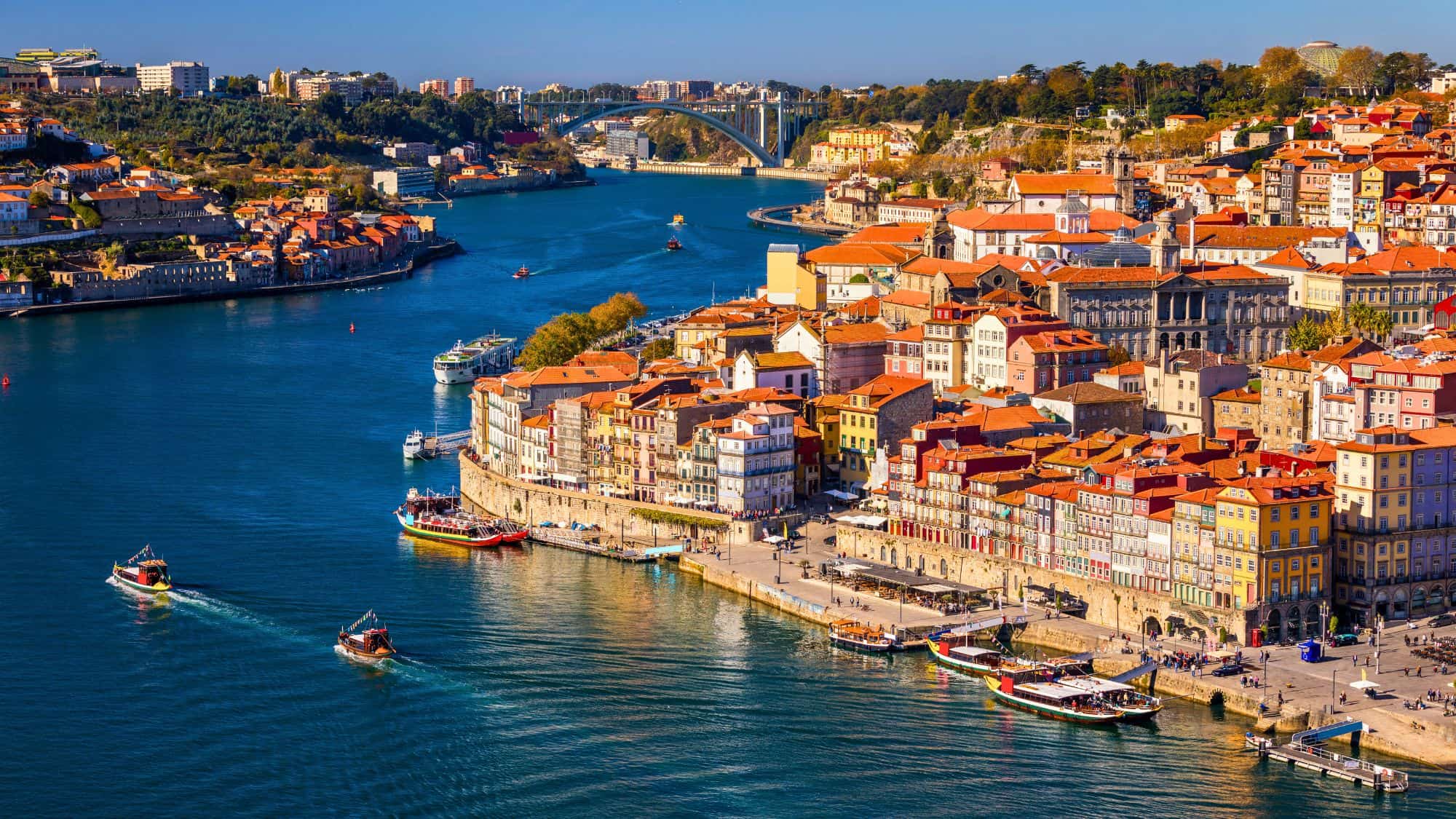
Porto rises steeply from the banks of the Douro River, a city of granite and tile that feels both rugged and romantic.
The Ribeira district is the historic heart of the city, a UNESCO World Heritage site where narrow, winding streets open up to lively plazas filled with locals and visitors. You will notice the facades of many buildings are covered in azulejos, the traditional blue and white ceramic tiles that depict everything from geometric patterns to historical scenes.
Sao Bento Railway Station is the most famous place to see them, with over 20,000 tiles covering its vestibule walls, illustrating key moments in Portuguese history.
Across the river in Vila Nova de Gaia, the skyline is dominated by the signs of famous port wine lodges. This is where port wine has been aged and stored for centuries before being shipped downriver to the rest of the world.
You can tour these cellars to learn about the fortification process and enjoy tastings of aged tawnies and rubies.
The Dom Luis I Bridge connects the two sides of the river and is an icon of the city; designed by a student of Gustave Eiffel, it features a double-deck metal arch that spans over 560 feet. You can walk across the top deck for dizzying views of the terracotta roofs and the river boats below, while the metro runs quietly alongside.
Lyon, France

Lyon is widely regarded as the gastronomic capital of France, a title it defends with thousands of restaurants ranging from humble bouchons to Michelin-starred establishments.
A bouchon is a traditional Lyonnais restaurant that serves heavy, meat-centric dishes like sausages, duck pate, and roast pork in a convivial, unpretentious atmosphere. There are only about 20 officially certified traditional bouchons in the city, ensuring that the culinary heritage is preserved and authentic.
For food lovers, a visit to Les Halles de Lyon Paul Bocuse is mandatory; this indoor market is named after the legendary chef and offers the highest quality cheeses, charcuterie, and wines from the region.
Beyond the food, Lyon has a unique architectural feature known as traboules. These are secret covered passageways that connect buildings and courtyards, originally used by silk weavers to transport their goods without exposing them to the rain.
There are around 400 traboules in the city, mostly located in the Vieux Lyon (Old Lyon) and Croix-Rousse districts, though only about 40 are open to the public. Exploring them feels like a treasure hunt, revealing hidden Renaissance courtyards and spiral staircases that are invisible from the main street.
The city also hosts the Fete des Lumieres (Festival of Lights) every December, a four-day event where artists light up buildings, streets, and parks with elaborate installations, attracting millions of visitors.
Bologna, Italy

Bologna is often nicknamed “La Grassa” (The Fat One) because of its rich culinary tradition, but it is also “La Dotta” (The Learned One) thanks to its university.
The University of Bologna was founded in 1088, making it the oldest university in continuous operation in the Western world. This student influence gives the city a lively, rebellious political spirit and ensures the piazzas stay buzzing late into the night.
The historic center is defined by its porticoes, over 24 miles of arched walkways that line the streets, protecting pedestrians from sun and rain. These porticoes were designated a UNESCO World Heritage site in 2021, recognized for their cultural and architectural significance.
You cannot visit Bologna without climbing Asinelli Tower, one of the famous Two Towers that lean precariously in the center of the city. Built in the early 12th century, the Asinelli stands about 318 feet tall, and climbing its 498 wooden steps rewards you with a panoramic view of the red-tiled roofs that give the city another nickname, “La Rossa” (The Red One).
The food culture here is serious business; this is the true home of ragu alla bolognese, which is traditionally served with tagliatelle, not spaghetti.
You can watch “sfogline” (pasta makers) rolling out fresh sheets of egg pasta by hand in shop windows throughout the Quadrilatero, the ancient market district that has specialized in food since the Middle Ages.
Edinburgh, Scotland

Edinburgh is a city of dramatic contrasts, built on a series of extinct volcanoes and rocky crags that give it a striking, vertical appearance.
The city is divided into two distinct areas: the medieval Old Town, with its chaotic jumble of tenements and narrow alleyways called closes, and the Georgian New Town, known for its orderly grid and neoclassical elegance. Both areas together form a designated UNESCO World Heritage site.
Edinburgh Castle dominates the skyline from its perch on Castle Rock, a fortress that has been a royal residence and military stronghold since the 12th century. It is home to the Stone of Destiny, a powerful symbol of Scottish monarchy used in coronation ceremonies for centuries.
If you enjoy the outdoors, a hike up Arthur’s Seat offers a rugged escape right on the edge of the city. This ancient volcano rises 822 feet above sea level and provides 360-degree views of the city and the Firth of Forth.
The energetic pulse of Edinburgh is best felt during August, when it hosts the Edinburgh Festival Fringe, the largest arts festival in the world.
For three weeks, thousands of performers from around the globe take over every available space (from theaters to church basements) to stage comedy, drama, and dance. The sheer volume of creativity is overwhelming, transforming the normally reserved city into a chaotic, delightful celebration of the arts.
Hamburg, Germany
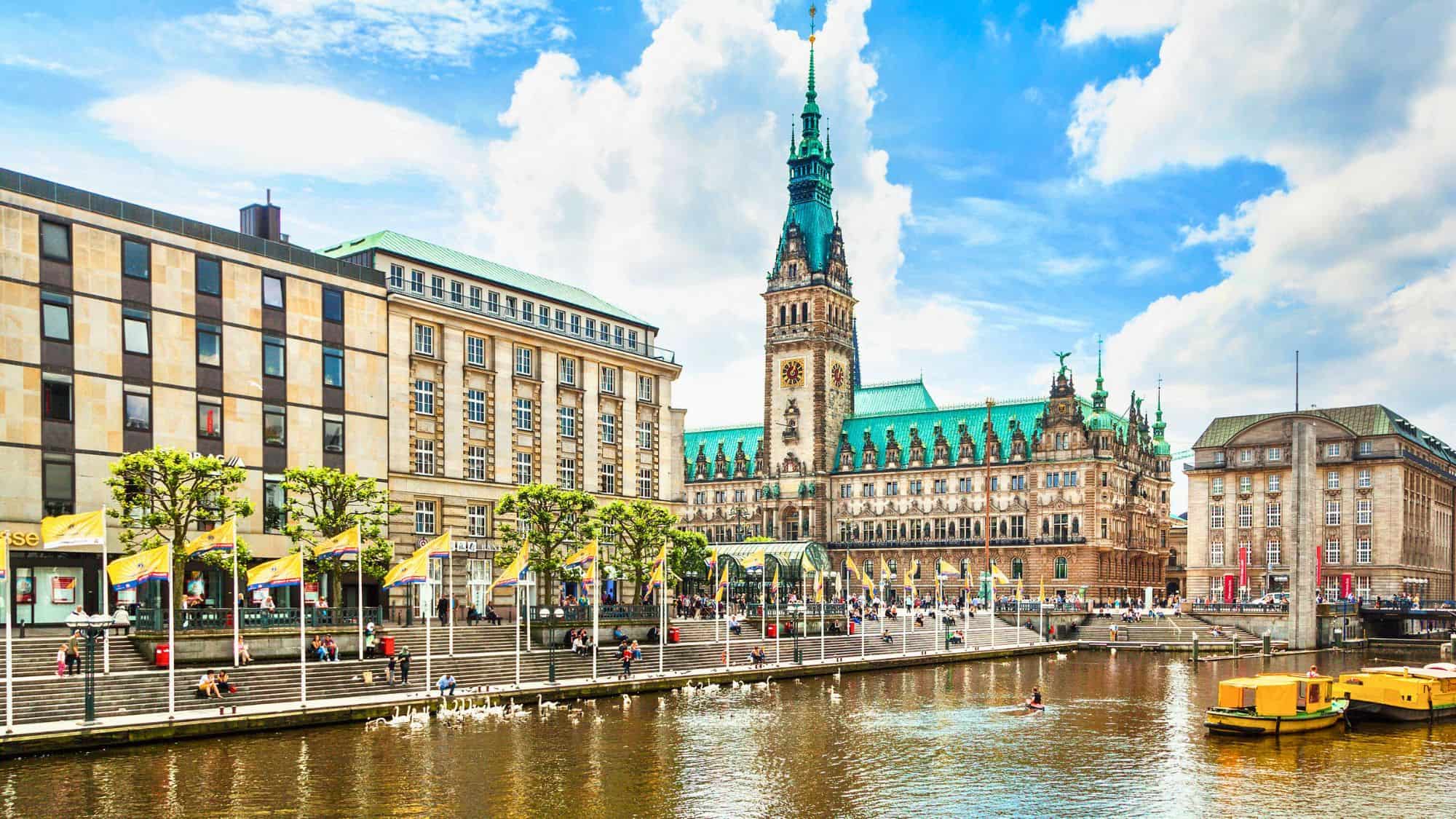
Hamburg is a city defined by water, with more bridges than Venice, Amsterdam, and London combined (around 2,500 in total).
It sits on the Elbe River and has historically been Germany’s “Gateway to the World” due to its massive port, which remains the third busiest in Europe. This maritime heritage shapes everything from the architecture to the food.
You can visit the Speicherstadt, the largest warehouse district in the world, built on timber-pile foundations. Its red-brick Gothic Revival buildings are crisscrossed by canals and were originally used to store goods like coffee, tea, and spices, earning it UNESCO World Heritage status.
A striking contrast to the brick warehouses is Elbphilharmonie, a modern concert hall that resembles a glass wave cresting atop an old brick warehouse. It opened in 2017 and features a public viewing plaza that offers sweeping views of the harbor and the city skyline.
For a different kind of energy, the Reeperbahn in the St. Pauli district is one of Europe’s most famous nightlife and red-light districts. It was here in the early 1960s that The Beatles honed their craft, playing hundreds of hours in gritty clubs before finding global fame.
Today, the area remains a center for music and theater, buzzing with a raw, unpolished vibe that stays true to the city’s sailor roots.
Sarajevo, Bosnia And Herzegovina
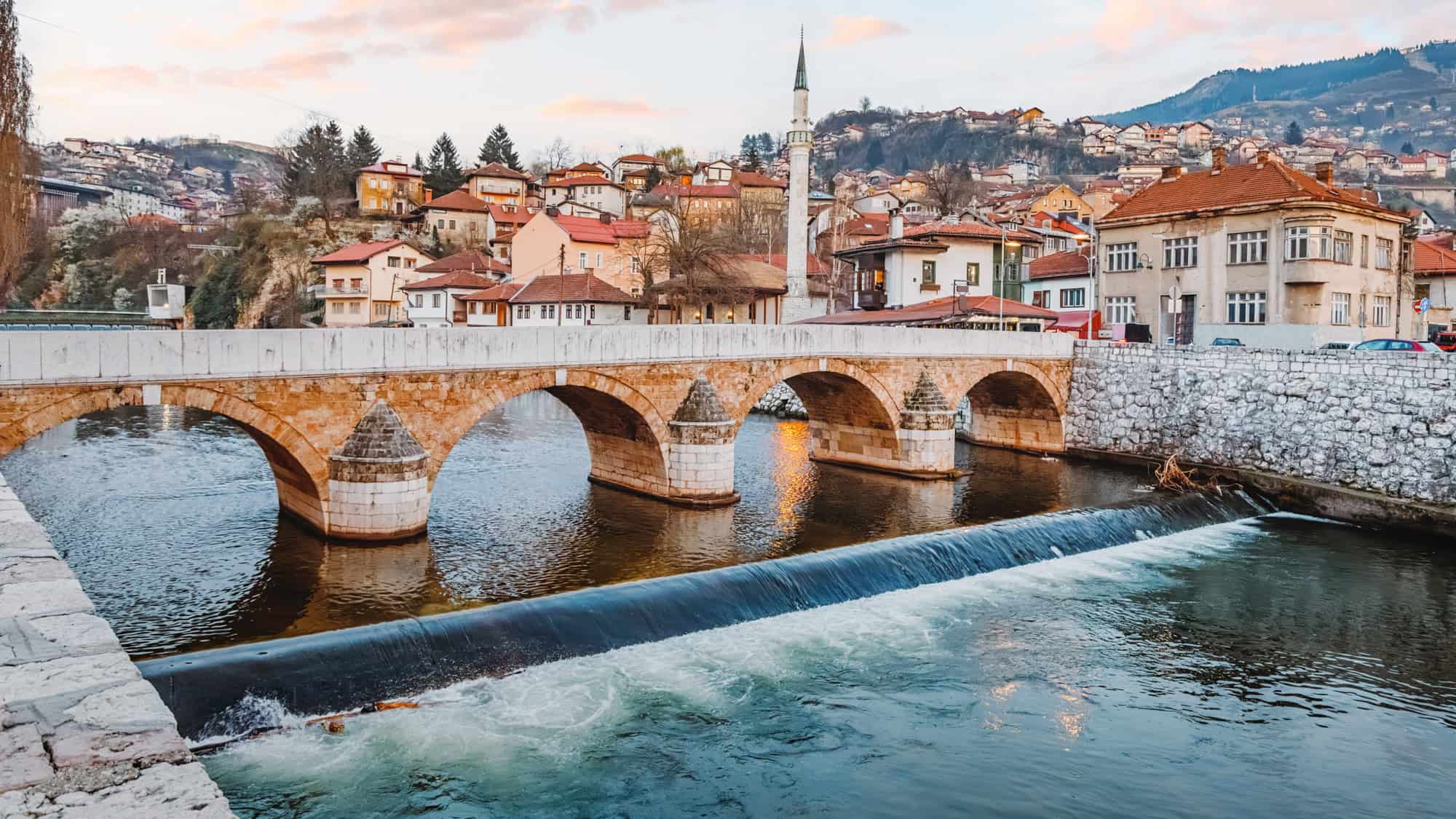
Sarajevo is a place where East meets West in the most literal sense, often called the “Jerusalem of Europe” because of its religious diversity. Within a few hundred yards in the city center, you can find a mosque, a Catholic cathedral, an Orthodox church, and a synagogue.
The Bascarsija is the old Ottoman bazaar, a maze of cobblestone alleys filled with the sound of coppersmiths hammering intricate designs into coffee sets. Here, you can sit and drink Bosnian coffee, which is prepared in a traditional dzezva pot and served with a cube of sugar and a Turkish delight.
The Sebilj Fountain, a wooden public fountain in the main square, is a major landmark and a gathering spot for locals and pigeons alike.
The city is surrounded by the Dinaric Alps, which hosted the 1984 Winter Olympics, and the abandoned bobsled track on Mount Trebevic is now covered in colorful graffiti, serving as a unique hiking destination.
You can reach the mountain via a cable car that was reopened in 2018, offering spectacular views over the red roofs of the city.
Sarajevo’s history is also marked by the Latin Bridge, the site where Archduke Franz Ferdinand was assassinated in 1914, an event that sparked World War I. A small museum on the corner near the bridge details the events of that day, placing you directly at a turning point in world history.
Bergen, Norway
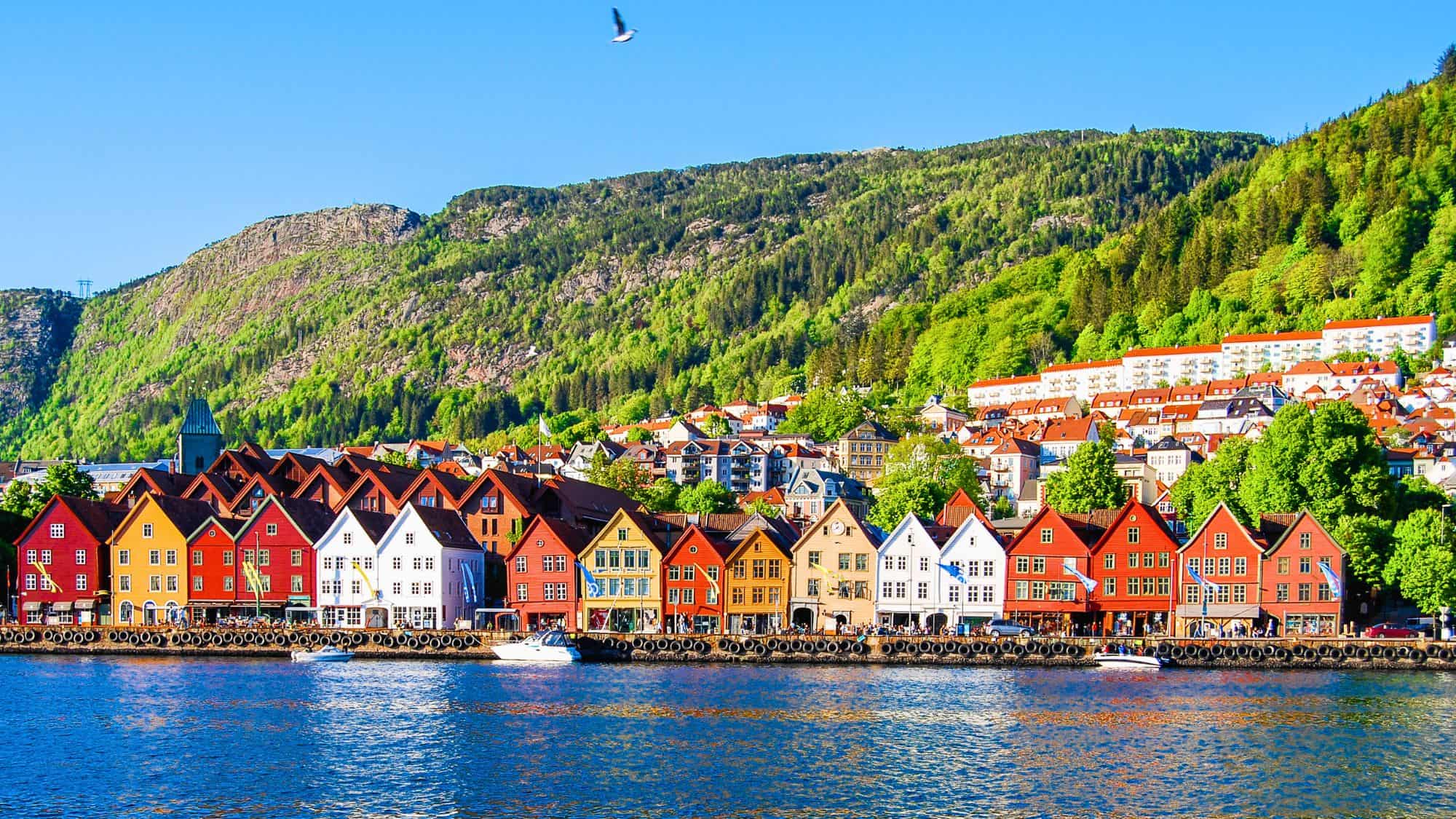
Bergen is the gateway to the fjords, surrounded by seven mountains and facing the North Sea, giving it a dramatic natural setting.
It is famously rainy, with precipitation occurring more than 230 days a year, but the locals barely seem to notice, and the city’s charm shines even in a drizzle.
Bryggen, the historic harbor district, features a row of colorful wooden commercial buildings that date back to the Hanseatic League’s dominance in the 14th century. These leaning structures are UNESCO-listed and have survived numerous fires over the centuries. Today, they house artists’ studios, boutiques, and restaurants.
To get the best perspective on the city, you can take the Floibanen funicular to the top of Mount Floyen. The ride takes just about six minutes and lifts you over 1,000 feet above sea level, offering expansive views of the city, the harbor, and the surrounding islands.
From the top, you can access a network of hiking trails that lead deep into the forest, where you might encounter the friendly resident goats that help maintain the landscape.
For seafood lovers, the Fish Market at the harbor has been a meeting place for merchants and fishermen since the 1200s. It remains a lively spot to sample fresh salmon, king crab, and local delicacies like fish cakes right off the boat.
Like Our Content? Follow Us On MSN (or click the Follow Button above) to see more from Traveling In Focus.