Found By Accident contains affiliate links and is a member of the Amazon Services LLC Associates Program. If you make a purchase using one of the Amazon links (or other affiliate links), we may receive compensation at no extra cost to you. See our disclosure policy for more information.
15 Warm February Getaways That Feel Like A Lifeline In The Midst Of Winter
February is often that awkward middle child of the calendar year. The holidays are a distant, fading memory (along with your motivation to stick to those New Year’s resolutions), but the promise of spring still feels like a cruel joke that nature isn’t quite ready to tell.
You find yourself staring out the window at a sky the color of dirty dishwater, wondering if you’ll ever feel the sun on your skin again without three layers of thermal fleece. And that deep, bone-chilling restlessness isn’t just in your head; it’s a biological scream for Vitamin D and a break from scraping ice off your windshield.
We crave the feeling of humidity frizzing up our hair and the smell of sunscreen mixed with salt air. There is something profoundly healing about trading snow boots for sandals and gray horizons for technicolor sunsets.
Whether you are looking to lounge by a pool until you resemble a raisin or hike up a mountain until your calves burn in protest, the world is full of places where winter is just a rumor.
So, stop doom-scrolling through photos of your friends’ vacations from three years ago and start planning your own great escape with one of these great locales.
Maui, Hawaii

If you want to feel like you’ve landed on another planet (one where stress is illegal and the scenery is almost aggressively beautiful), Maui is the place. It’s the second-largest island in the Hawaiian archipelago, but it packs a punch that makes it feel like an entire continent condensed into 727 square miles.
You can start your day watching the sunrise from the summit of Haleakala, a dormant volcano that towers 10,023 feet above sea level. It’s freezing up there before dawn (ironic, considering you came for heat), so bring a blanket unless you want to shiver your way through the most majestic light show on earth.
Afterward, you can thaw out on Wailea Beach, where the sand is so soft it feels like powdered sugar between your toes. And the famous Road to Hana is practically a rite of passage here.
It’s a 64-mile stretch of highway featuring over 600 curves and 59 bridges, many of which are one-lane. It’s a test of your driving skills and your passenger’s stomach, but the waterfalls and bamboo forests are worth every hairpin turn.
February is also prime whale-watching season, as thousands of North Pacific humpback whales migrate to these warm, shallow waters to mate and give birth, putting on spectacular acrobatic displays.
Marrakech, Morocco

Marrakech attacks your senses in the best possible way. It is loud, colorful, chaotic, and utterly mesmerizing.
The heart of the city is the Jemaa el-Fnaa, a massive square that feels like a medieval circus that never packed up and left.
By day, you’ll find snake charmers (yes, actual cobras) and juice vendors aggressively selling you the freshest orange juice you’ve ever tasted. By night, it transforms into a smoky, sizzling open-air food court where you can eat everything from grilled lamb to snail soup.
You can’t miss the historic Medina, a UNESCO World Heritage site founded in 1070. It is a labyrinth of narrow alleyways where Google Maps goes to die. You will get lost, but that’s half the fun (that is, until you realize you’ve circled the same carpet shop three times).
Speaking of shopping, the souks are legendary. You can haggle over leather bags, spices, and brass lamps that look like they might house a genie. Keep in mind: the first price is never the real price, and walking away is your strongest negotiating tactic.
For a break from the hustle, visit the Majorelle Garden. It was restored by fashion designer Yves Saint Laurent, and the electric blue villa amidst the cacti is striking. It spans two and a half acres and provides a tranquil, shady retreat that feels miles away from the motorbike exhaust of the main streets.
Cartagena, Colombia

Walking through the Old Town of Cartagena feels like stepping onto a movie set where the art director had an unlimited budget for bougainvillea.
Founded in 1533, this walled city on the Caribbean coast is a masterclass in colonial architecture, with balconies overflowing with flowers and buildings painted in every shade of sunset. The humidity here is no joke; it hugs you like a needy aunt. But that’s just an excuse to stop for a limonada de coco (coconut limeade) every three blocks.
The historic center is surrounded by Las Murallas, the most extensive fortifications in South America, built to protect the city from pirate attacks (and now mostly used for watching the sun dip below the ocean).
You can’t visit without noticing the Palenqueras, women in vibrant dresses balancing bowls of tropical fruit on their heads. They are icons of the city, originating from San Basilio de Palenque, the first free town in the Americas established by escaped enslaved people.
And while the beaches right in the city are decent, the real magic happens if you take a boat out to the Rosario Islands. It’s an archipelago of 27 small coral islands located about 60 miles offshore, where the water is that impossible shade of turquoise that looks fake.
Cancun, Mexico

Forget what you think you know about Cancun being just for spring breakers making questionable choices. While the Hotel Zone is definitely a party, there is so much more to this slice of the Yucatan Peninsula.
The beaches are undeniably spectacular, with white sand made of crushed coral that stays cool even when the sun is blazing.
But if you want to swap the margarita beachside for something a bit more adventurous, head to a cenote. These natural sinkholes are filled with fresh, crystal-clear groundwater and were considered sacred gateways to the underworld by the Mayans. Swimming in one feels spiritual (or at least really, really refreshing).
History lovers have it easy here, with Chichen Itza located just a couple of hours inland. This ancient Mayan city is dominated by El Castillo, a pyramid that demonstrates just how astronomically advanced this civilization was. During the equinoxes, shadows look like a serpent slithering down the steps.
Closer to the water, you can visit the Cancun Underwater Museum of Art (MUSA). It features over 500 life-sized sculptures submerged on the ocean floor, designed to promote coral growth and distract divers from natural reefs. It is eerie and beautiful, like a submerged Pompeii populated by statues of people watching TV or driving cars.
Cape Town, South Africa

Cape Town is the supermodel of cities: stunning from every angle and fully aware of it. It’s sandwiched between a rugged mountain range and the Atlantic Ocean, creating a dramatic backdrop that makes even a trip to the grocery store look scenic.
Dominating the skyline is Table Mountain, a flat-topped landmark that rises 3,558 feet above the city. You can hike up if you’re feeling athletic (and want to question your fitness levels publicly), or take the aerial cableway, which rotates 360 degrees so you don’t miss a single view on the way up.
The “tablecloth” cloud that often pours over the edge is a meteorological marvel that locals claim is a smoking contest between the devil and a pirate.
February is peak summer here, so the weather is perfect for visiting Boulders Beach. This is one of the few places in the world where you can swim alongside a colony of African penguins. They are ridiculously cute waddling around the granite boulders. Just remember to keep your fingers to yourself; they have surprisingly sharp beaks and aren’t afraid to use them.
Just a short drive away is the Cape Winelands, specifically Stellenbosch and Franschhoek. This region has been producing wine since 1659, making it the oldest wine industry outside of Europe.
Sydney, Australia

While you’re shivering in the Northern Hemisphere, Sydney is living its best life in the final stretch of summer. It’s a city that revolves around its harbor, which is arguably one of the most beautiful natural harbors in the world.
The Sydney Harbour Bridge, affectionately nicknamed “The Coathanger,” opened in 1932 and is the world’s largest steel arch bridge. You can actually climb to the top of it, provided you are willing to wear a deeply unflattering gray jumpsuit and have zero fear of heights.
But the view from 440 feet up, looking down at the Opera House sails, is worth every trembling step.
Beach culture here is practically a religion. Bondi Beach is the most famous, but if you want to avoid the crowds of backpackers, take the coastal walk from Bondi to Coogee. It’s a nearly 4-mile cliffside trail that offers uninterrupted ocean views and plenty of spots to stop for a flat white (don’t ask for Starbucks here; they have standards).
At the start of the walk, you’ll see the Bondi Icebergs Club, home to a saltwater pool that gets crashed by ocean waves. It dates back to 1929 and is the most Instagrammed pool in Australia for a reason.
If you head into the city, explore the Rocks, the oldest part of Sydney. It was once a convict settlement full of gambling dens and is now full of upscale pubs and weekend markets. Talk about a glow-up.
Rio De Janeiro, Brazil

Rio doesn’t just ask for your attention; it demands it with a feather boa and a samba beat. And February is usually when Carnival takes over (though dates vary by year), turning the streets into the world’s biggest party. Even if you miss the official parades, the energy is infectious.
Watching over the chaos is Christ the Redeemer, standing 98 feet tall atop Mount Corcovado. The statue’s arms stretch 92 feet wide, embracing the city in a gesture of peace that contrasts hilariously with the chaotic traffic below.
Getting up there involves a cog train ride through the Tijuca Forest, the largest urban rainforest in the world, covering 12.4 square miles.
Down at sea level, the beaches are the city’s living room. Copacabana runs for 2.5 miles and is distinguished by its wave-patterned mosaic promenade, designed by landscape architect Roberto Burle Marx.
If you need a break from the sand, take the cable car up Sugarloaf Mountain. The ride is done in two stages, first to Morro da Urca and then to the summit at 1,299 feet. Go at sunset to see the city lights flicker on.
Gran Canaria, Canary Islands

Gran Canaria is often called a “miniature continent” because you can drive from a desert to a subtropical forest in under an hour. It sits off the coast of northwest Africa but belongs to Spain, giving you European infrastructure with African sunshine.
The south of the island is home to the Maspalomas Dunes, a 988-acre nature reserve that looks like a slice of the Sahara dropped next to the Atlantic.
Walking through the rolling sand hills is surreal, especially when you stumble upon the 19th-century lighthouse, Faro de Maspalomas, standing guard at the edge of the ocean. It stands 184 feet tall and has been guiding ships since 1890.
In the center of the island, the landscape turns rugged and dramatic. Roque Nublo is a volcanic rock standing 262 feet tall, perched on a plateau. It was considered a sacred monument to the sun god by the indigenous Guanche people.
The hike up is relatively short but steep, rewarding you with views that stretch all the way to the neighboring island of Tenerife (and the majestic Mount Teide) on a clear day.
For a dose of charm, visit Puerto de Mogan, nicknamed “Little Venice” because of its network of canals and bridges. The white houses are trimmed with bright colors and draped in bougainvillea, making it impossibly photogenic and the perfect place to eat fresh fish until you can’t move.
Dubai, UAE

Dubai is what happens when you have unlimited money and a refusal to acknowledge the word “impossible.” It’s a city of superlatives: the tallest building, the biggest mall, the most luxurious hotels.
The Burj Khalifa pierces the sky at a staggering 2,717 feet. Taking the elevator to the observation deck takes about a minute, and your ears will pop as you ascend to view the city sprawling out into the desert.
At its base lies the Dubai Mall, which spans over 12 million square feet (equivalent to more than 50 soccer fields). It has an aquarium, an ice rink, and a dinosaur skeleton (just in case shopping wasn’t entertaining enough).
But strip away the glitz, and you find its desert roots. A desert safari is a must-do, involving 4×4 dune bashing that will rattle your teeth, followed by a surprisingly peaceful dinner in a Bedouin-style camp. You can ride camels (they are grumpy, be warned) and watch belly dancing under the stars.
For a taste of old Dubai, head to Dubai Creek and take an abra (traditional wooden boat) across the water for just 1 dirham. On the other side, the Gold Souk and Spice Souk await. The Gold Souk alone has over 300 retailers. The sheer amount of bling on display is blinding.
Singapore

Singapore is the overachiever of cities. It’s clean, efficient, green, and obsessed with food. And it’s also hot and humid year-round, so pack linen unless you enjoy feeling like a steamed dumpling.
The crown jewel is Gardens by the Bay, a 250-acre nature park that looks like a sci-fi utopia. The Supertree Grove features vertical gardens ranging from 80 to 160 feet tall. At night, they light up in a synchronized show that makes you feel like you’re in the movie Avatar.
Nearby is the Cloud Forest dome. It’s home to one of the world’s tallest indoor waterfalls (115 feet), misting rare plants in a cool, conservatory environment that offers a nice break from the outdoor heat.
And you cannot visit Singapore without eating at a hawker center. These are open-air food courts where you can get Michelin-star quality meals for a few dollars. The most famous dish is Hainanese chicken rice, but don’t sleep on the laksa or char kway teow.
For a bit of history, wander through the Singapore Botanic Gardens, founded in 1859. It’s the only tropical garden to be honored as a UNESCO World Heritage Site. Or explore Kampong Glam, the historic Malay quarter, dominated by the golden dome of the Sultan Mosque.
Sri Lanka

Sri Lanka is shaped like a teardrop, but it will only make you cry tears of joy (and maybe spice, if you aren’t careful with the curry).
This island nation packs ancient ruins, safari parks, and beaches into a manageable size. Start in the cultural triangle at Sigiriya, an ancient rock fortress that rises nearly 660 feet straight out of the jungle.
It was built by King Kashyapa in the 5th century, who clearly valued security over convenience. The climb involves 1,200 steps, and you’ll pass frescoes of celestial maidens before reaching the top, where the ruins of the palace offer 360-degree views. Just watch out for the monkeys; they look cute, but will steal your stuff without remorse.
Then head south to the hill country for a change of pace. The train ride from Kandy to Ella is famous for a reason; it winds through misty tea plantations and emerald hills. It takes about seven hours, but hanging out the open door with the wind in your hair is a quintessential travel experience.
In Ella, you can visit the Nine Arch Bridge, a colonial-era viaduct built entirely of brick, rock, and cement without any steel. And down on the coast, Mirissa is the spot for chilling out. The water is warm, the coconuts are fresh, and the pace of life slows to a crawl.
Auckland, New Zealand
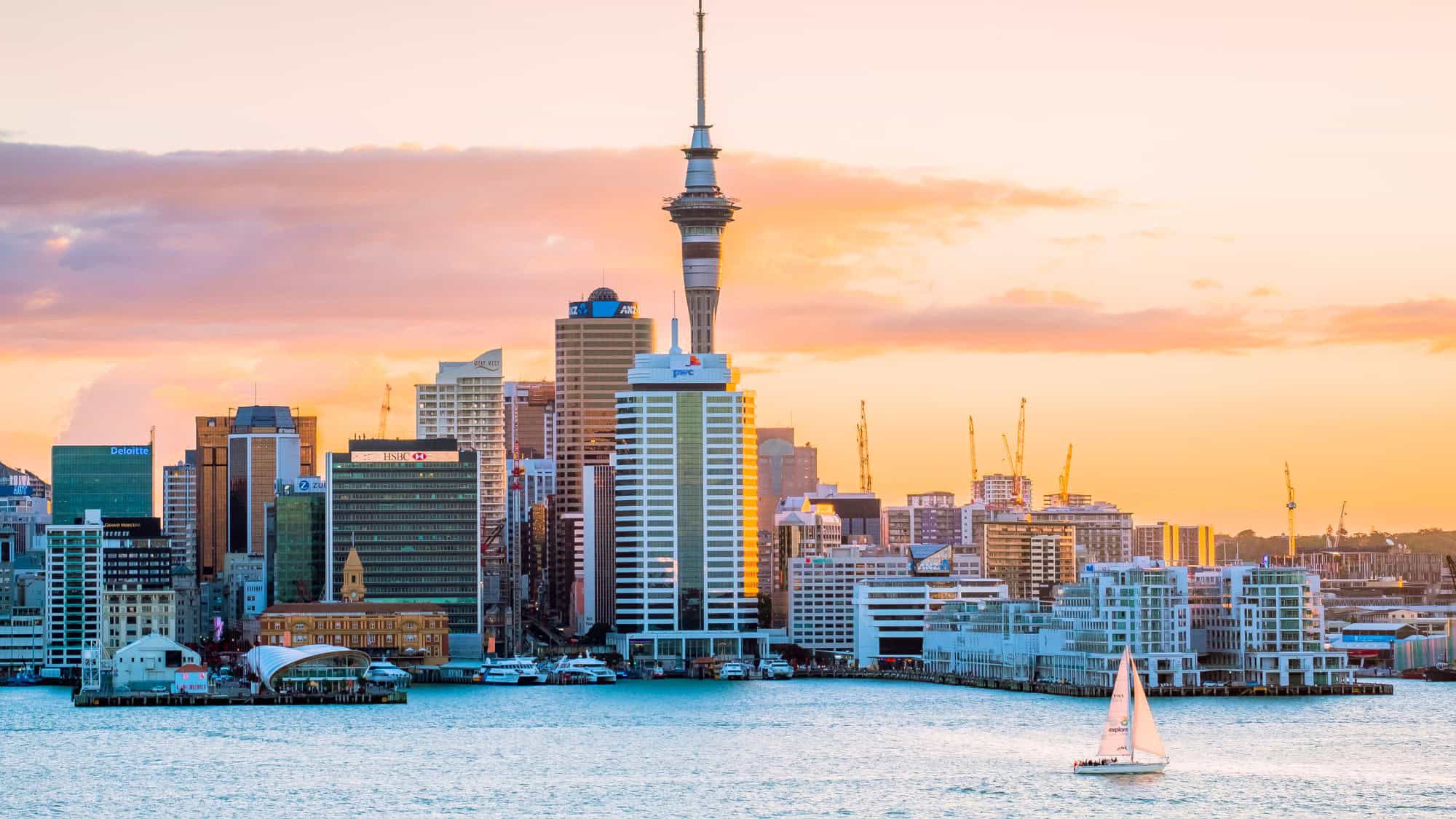
Auckland is often just a landing pad for travelers heading to the South Island, which is a tragedy because “the City of Sails” is fantastic.
It is built on a volcanic field with approximately 53 volcanoes, which sounds terrifying but mostly just means there are lots of grassy hills with great views. Mount Eden (Maungawhau) is the highest natural point at 643 feet.
You can walk to the summit and peer into the grassy crater, which is sacred to the Maori people and thankfully hasn’t erupted in 28,000 years.
The city is also flanked by two harbors, Waitemata and Manukau, meaning you are never far from the water. The Viaduct Harbour is the place to be for dining, filled with superyachts that will make you wonder if you married the wrong person.
From here, you can catch a ferry to Waiheke Island, just a 40-minute ride away. Waiheke is known as the “island of wine,” boasting over 30 wineries. It has a microclimate that is slightly warmer and drier than the mainland, perfect for growing grapes and drinking Syrah in the sun.
Back in the city, the Sky Tower dominates the skyline at 1,076 feet tall. It’s the tallest freestanding structure in the Southern Hemisphere. If looking through the glass floor isn’t enough for you, you can actually bungee jump off the side of it (I’ll be cheering you on from the bar, thanks).
Muscat, Oman

Muscat is the quiet, sophisticated neighbor to the flashy Dubai. It’s a city that has retained its traditional charm, with a law that buildings generally shouldn’t exceed roughly 8 to 10 floors, keeping the skyline low and elegant against the backdrop of the Al Hajar Mountains.
The absolute must-see is the Sultan Qaboos Grand Mosque. It is an architectural masterpiece that can hold 20,000 worshippers.
The main prayer hall features a chandelier that is 46 feet tall and weighs 8.5 tons, dripping with Swarovski crystals. It also houses one of the world’s largest hand-woven carpets, which took 600 women four years to weave.
For a taste of tradition, head to the Mutrah Souq. It is one of the oldest markets in the Arab world, filled with the scent of Frankincense, which Oman is famous for producing.
The alleys are a maze of silver jewelry, pashminas, and antique daggers known as khanjars. And unlike some other markets, the vendors here are generally polite and less aggressive, making for a pleasant stroll.
If you crave nature, drive out to Wadi Shab. It’s a river gorge where you hike through cliffs and date palms to reach emerald green pools. You can swim through a cave to find a hidden waterfall inside. It totally feels like something out of an Indiana Jones movie (minus the booby traps).
Luang Prabang, Laos

Luang Prabang sits at the confluence of the Mekong and Nam Khan rivers, and it moves at a pace that can only be described as “horizontal.” It was the royal capital until 1975 and is now a UNESCO World Heritage site, protected for its unique blend of traditional Lao architecture and European colonial buildings.
The town is famous for the morning alms-giving ceremony, Tak Bat. Every day at sunrise, hundreds of saffron-robed monks walk silently through the streets to collect food offerings from locals.
It is a deeply spiritual tradition, though visitors are asked to observe respectfully from a distance (and please, turn off the camera flash).
The nature surrounding the town is also spectacular. Kuang Si Falls is about 18 miles south and is arguably the most beautiful waterfall in Asia. The water flows over limestone tiers, creating pools of stunning turquoise water that you can swim in.
There is also a sanctuary for rescued Asiatic black bears (moon bears) near the entrance, so you get waterfalls and bears in one trip.
In town, climb the 328 steps up Mount Phousi for sunset. At the top, there is a golden stupa, and the view over the rivers and the green mountains is the definition of peace.
Afterward, descend into the night market, which sets up on the main street. It’s quiet, lit by lanterns, and full of handmade textiles; the perfect place to buy pants you’ll only wear on vacation.
Seville, Spain

Seville is the frying pan of Spain, but in February, it’s just pleasantly toasty while the rest of Europe is freezing. This city is the birthplace of flamenco, and the passion is palpable in every plaza.
The Real Alcazar is the headline act here. It’s a royal palace originally developed by Moorish Muslim kings, renowned for its stunning tile work and lush gardens. And it is still used by the Spanish royal family, making it the oldest royal palace still in use in Europe.
You might recognize it as the Water Gardens of Dorne from Game of Thrones. Even if you don’t, the intricate carvings and courtyards are so detailed you could stare at them for hours (or until your neck hurts).
Just across the way is the Seville Cathedral, the largest Gothic cathedral in the world. It’s massive, imposing, and houses the tomb of Christopher Columbus (though other places also claim to have him, so who knows).
The bell tower, La Giralda, was originally a minaret for the Great Mosque of Seville. You don’t climb stairs to get to the top; instead, you walk up 35 ramps. This was designed so that the muezzin could ride a horse to the top to call the faithful to prayer (talk about working smarter, not harder).
Finish your day at the Plaza de Espana, built for the Ibero-American Exposition of 1929. It’s a semi-circular complex with tiled alcoves representing every province in Spain, perfect for a photo op before you go eat your weight in tapas.
Like Our Content? Follow Us On MSN (or click the Follow Button above) to see more from Traveling In Focus.