Found By Accident contains affiliate links and is a member of the Amazon Services LLC Associates Program. If you make a purchase using one of the Amazon links (or other affiliate links), we may receive compensation at no extra cost to you. See our disclosure policy for more information.
14 Popular Winter Tourist Traps That Will Drain Your Wallet And Patience
Winter arrives with a predictable pattern that sends us all into a mild panic. We stare out the window at the accumulation of gray slush on the driveway and suddenly convince ourselves that spending a small fortune on a week away is the only rational financial decision to make.
The dream is always the same for every single one of us. You see yourself sipping a hot cocoa in a silent snowy lodge with a fireplace that actually works, or perhaps lying on a sun-drenched beach where the only footprints in the sand are your own.
It is a lovely fantasy that keeps us going through the darker months.
But that daydream usually crumbles the moment you step into the airport terminal and realize that half the hemisphere had the exact same epiphany at the exact same time.
So instead of peace and quiet, you find yourself elbow-to-elbow with thousands of strangers, paying premium prices for the privilege of waiting in line for a rental car that might not even be there.
The reality of winter travel is often a chaotic mix of overpriced appetizers and fighting for personal space in a lobby. And sometimes, the most valuable travel advice is simply knowing where everyone else is going so you can run in the opposite direction.
Aspen, Colorado

Aspen sits at the very top of the winter bucket list for many with good reason, but that popularity comes with a price tag that might actually make you weep.
This town is famous for its four ski mountains and a downtown area that feels like a runway for the ultra-wealthy. And during the peak winter months, the population of roughly 7,000 residents swells to unmanageable levels as tourists flood the valley.
You might think you are paying for a ski trip, but you are really paying for the privilege of standing in line behind someone wearing a designer ski suit that costs more than your first car.
The financial hit is immediate and aggressive. Single-day lift tickets can soar well over $200 during the holiday season. That is not a typo, just a painful reality for anyone without a trust fund.
Dining out requires the kind of strategic planning usually reserved for military operations, with reservations booked months in advance. If you do manage to snag a table, you will likely be paying $30 for a burger (and that probably doesn’t even include cheese).
While the slopes are undeniably world-class, the sheer density of people fighting for fresh powder can turn a relaxing morning into a contact sport. Unless you enjoy dodging skiers while hemorrhaging money, this is a pass.
Cancun, Mexico
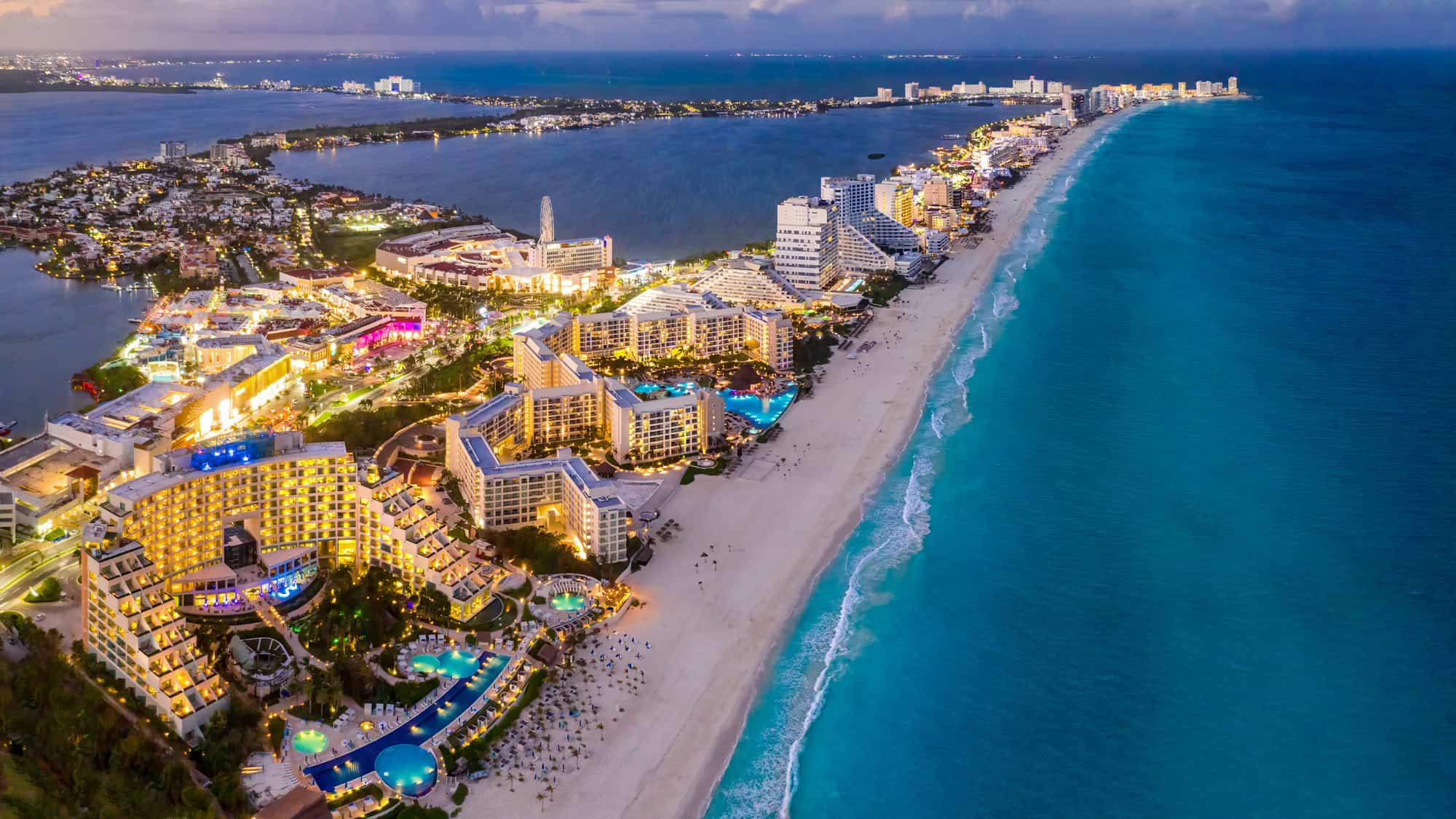
Cancun is the default setting for anyone in North America who feels a vitamin D deficiency coming on in January. It is incredibly easy to reach from most major airports, and the Caribbean Sea is that specific shade of turquoise that looks great on social feeds.
However, that accessibility is exactly why you should probably avoid it. The Hotel Zone is a 14-mile strip of high-rise resorts that feels less like an authentic Mexican experience and more like a crowded shopping mall with a very nice pool attached.
You are not really seeing the country; you are just seeing other tourists who are also trying to avoid the snow.
The weather is generally warm, but the humidity in winter often hovers around 80 percent. That means the second you step outside, your hair expands to three times its normal size, and you start sweating in places you didn’t know you could sweat.
Because everyone wants to be there, occupancy rates soar, and you will find yourself waking up at dawn just to reserve a lounge chair with a towel (a competitive sport I personally have to participate in every November in Cabo).
Plus, the prices for flights and hotels jump significantly because the travel industry knows you are desperate. You end up paying double the normal rate to share a buffet line with thousands of other sunburned travelers.
Whistler, Canada

Whistler Blackcomb is a massive resort that attracts riders from every corner of the globe, and while the terrain is legendary, the weather can be a bit of a dampener.
Locals affectionately refer to the precipitation as “Whis-rain” because the resort sits so close to the coast that freezing levels fluctuate wildly. You might book your trip dreaming of fluffy powder, only to spend your day getting soaked to the bone in 34°F rain.
And skiing in the rain is miserable, cold, and makes you question every life choice that led you to that moment.
The sheer volume of humanity here is also staggering. Whistler receives over 2 million visitors annually, and it feels like every single one of them is in the gondola line with you at 8:30 AM.
The village at the base is pedestrian-friendly but gets clogged with crowds shuffling between shops and restaurants. And if you are staying in the village, prepare to pay a premium that would make your accountant scream.
Accommodations are incredibly pricey during the peak season, and you often pay hundreds of dollars a night for a room that is barely large enough to fit your luggage.
It is a brilliant mountain, but the wet snow and the crushing crowds can turn a dream trip into a soggy, expensive ordeal.
Puerto Rico

Puerto Rico is a spectacular island filled with rich history, incredible food, and some of the nicest people you will ever meet. Unfortunately, winter is the absolute high season, and the capital city of San Juan transforms into a parking lot for massive cruise ships.
The narrow, cobblestone streets of Old San Juan are undeniably charming, but they lose a lot of their magic when they are packed wall-to-wall with day-trippers.
You can barely see the colorful colonial architecture through the sea of people taking selfies and tour groups moving in slow motion.
The cost of visiting during this time is another major deterrent. Hotel rates in San Juan can jump by 50 percent or more from December through April. So you are paying top dollar for beaches that are crowded and restaurants where you have to shout to be heard.
While the island’s bioluminescent bays are a must-see natural wonder, the tours can be so overcrowded that you spend more time bumping your kayak into strangers than admiring the glow.
Mosquito Bay in Vieques is the brightest in the world, but good luck enjoying that natural splendor when you are surrounded by fifty other people paddling in circles and shouting at their friends.
Reykjavik, Iceland

Iceland looks like a fairytale in photos, with its dramatic snowy landscapes and the elusive northern lights dancing overhead. But the reality of visiting in the dead of winter is dark (literally dark).
In December and January, Reykjavik gets only about four to five hours of daylight. That gives you a very tiny window to actually see the waterfalls, glaciers, and black sand beaches you flew all that way to explore.
The rest of the time, you are stumbling around in the pitch black, hoping you do not slip on the ice and embarrass yourself in front of a local.
It is also exceptionally expensive, even by European standards. A simple beer at a bar can easily cost you $10 or more, and a basic meal will set you back a shocking amount. Your wallet will feel significantly lighter, and not in a good way.
The weather is also unpredictable and fierce, with winds strong enough to rip the door off a rental car (rental agencies genuinely warn you about this, which is terrifying).
Roads can close at a moment’s notice due to storms, leaving you stranded and forcing you to reschedule expensive tours. It is an adventure, sure, but it involves a lot of waiting in the dark and checking weather apps.
Phuket, Thailand

Phuket is the largest island in Thailand and serves as a magnet for sunseekers from Europe and beyond during the winter months. The beaches are famous for a reason, but that fame comes at a high cost.
Patong Beach, the main tourist hub, is particularly notorious for being overcrowded and loud. It is less about tranquil tropical relaxation and more about dodging jet skis and vendors trying to sell you everything from cheap sunglasses to custom suits.
You go there for serenity and end up with a headache and a handful of brochures you didn’t want.
The island receives millions of visitors each year, and the infrastructure is straining under the pressure. Traffic jams are incredibly common, and it can take over an hour to travel just a few miles during rush hour.
I know you did not fly halfway around the world to sit in traffic that looks exactly like your morning commute back home.
The prices in Phuket are also higher than almost anywhere else in Thailand. You pay a “tourist tax” on everything from tuk-tuks to pad thai.
St. Moritz, Switzerland

St. Moritz is the birthplace of winter tourism, and it certainly knows how to charge for that historical significance. This is where royalty, celebrities, and billionaires go to be seen, and if you do not have a private jet parked nearby, you might feel a bit out of place.
The prices for hotels are astronomical. A standard room in a 5-star hotel can easily run over $1,000 a night. You are paying for the prestige as much as the pillow. And frankly, I need the pillow to be made of clouds for that price.
The resort is known for its “Champagne climate” because it is sunny on average 322 days a year. That sounds delightful until you realize everyone else wants a piece of that winter sunshine, too.
The slopes are often crowded with people who seem more interested in showing off the latest high-fashion ski gear than actually making turns. And reservations for lunch on the mountain need to be made weeks in advance.
Plus, the atmosphere can feel a bit stuffy and pretentious. You might get side-eye for wearing a jacket from last season (the horror!).
It’s a beautiful place, but the exclusivity makes it unwelcoming for the average traveler just looking for good snow.
Orlando, Florida

Orlando is synonymous with theme parks, and winter break is absolute prime time for families looking to meet a certain famous mouse.
Disney World and Universal Studios are packed to capacity during the holidays and school breaks. You spend hundreds of dollars on tickets only to spend the majority of your day standing in lines that loop around buildings.
Waiting two hours for a three-minute ride is a test of patience that few adults pass without gritting their teeth. And the “happiest place on earth” feels a lot less happy when you are shoulder-to-shoulder with thousands of other stressed-out parents.
The weather can be surprisingly hit or miss in winter. It is not always warm in Central Florida like you might expect. Temperatures can dip into the 40s or 50s°F, which makes water rides absolutely miserable. You end up shivering in a plastic poncho (which is a fashion statement nobody wants to make).
Traffic around the attractions is also a nightmare, often taking 45 minutes to drive just 5 miles. You spend more time in your car than on the rides.
Lapland, Finland

Lapland offers the quintessential winter wonderland experience, complete with Santa Claus Village and reindeer rides that look straight out of a storybook.
But the cold here is absolutely no joke. Temperatures can drop to -22°F or even lower during the peak winter months. That is the kind of cold that hurts your face and freezes your eyelashes instantly.
You have to dress in so many layers that you end up walking like a penguin, which is cute for about five minutes until you have to use the restroom.
The popularity of Lapland has exploded in recent years, and Rovaniemi gets incredibly crowded with tourists chasing the Santa fantasy. Prices for husky safaris and glass igloos are steep.
A single night in a glass igloo can cost upwards of $600. You are paying a lot of money to sleep in a transparent room where you might end up just seeing clouds instead of the aurora borealis.
The daylight hours are also minimal. In mid-winter, the sun barely rises above the horizon, so you live in a state of perpetual twilight. This can mess with your internal clock and leave you feeling exhausted by 2 PM.
Cape Town, South Africa

Cape Town is undoubtedly stunning, but visiting in December or January means dealing with the infamous “Cape Doctor.” This is a strong south-easterly wind that batters the coast with surprising ferocity.
It clears the pollution, which is nice, but it also whips sand into your eyes and can make sitting on the beach physically painful. You try to have a nice picnic, and your sandwich ends up with a crunchy sand coating.
Eating grit is not exactly the gourmet experience you traveled 20 hours for.
This is also peak tourist season in South Africa, so accommodation prices skyrocket, and popular spots like Table Mountain have massive lines. You might end up waiting two hours or more just to get on the cable car to see the view.
The city has also faced severe water scarcity issues in recent years. While the drought situation has improved, visitors are still urged to be extremely water-wise. You might find shower times restricted or pools closed.
And the beaches? They are beautiful to look at, but the water is freezing. Atlantic Ocean temperatures here hover around 55°F even in summer, so swimming is a quick dip for the brave (or foolish).
Chamonix, France

Chamonix is legendary among mountaineers and expert skiers, sitting at the foot of Mont Blanc, which is the highest summit in the Alps at 15,774 feet. The scenery is dramatic and impressive, but the skiing is really not for the faint of heart.
Much of the terrain is challenging and off-piste, requiring a high level of skill. If you are a beginner or intermediate skier, you might find yourself terrified rather than exhilarated.
It is a place where you often need a guide just to stay safe and avoid falling into a crevasse.
The town itself is bustling and often chaotic during the winter. Traffic jams clog the valley floor, creating a smog that obscures the views you came for. The lift system is fragmented, meaning you have to take buses between different ski areas.
Fighting your way onto a crowded ski bus while wearing stiff ski boots is a special kind of torture I wouldn’t wish on anyone.
And the lines for the Aiguille du Midi cable car are infamous. You can wait hours just to get up to the viewing platform. At the end of the day, it is expensive, crowded, and aggressive, lacking the cozy charm of smaller French villages.
Maui, Hawaii
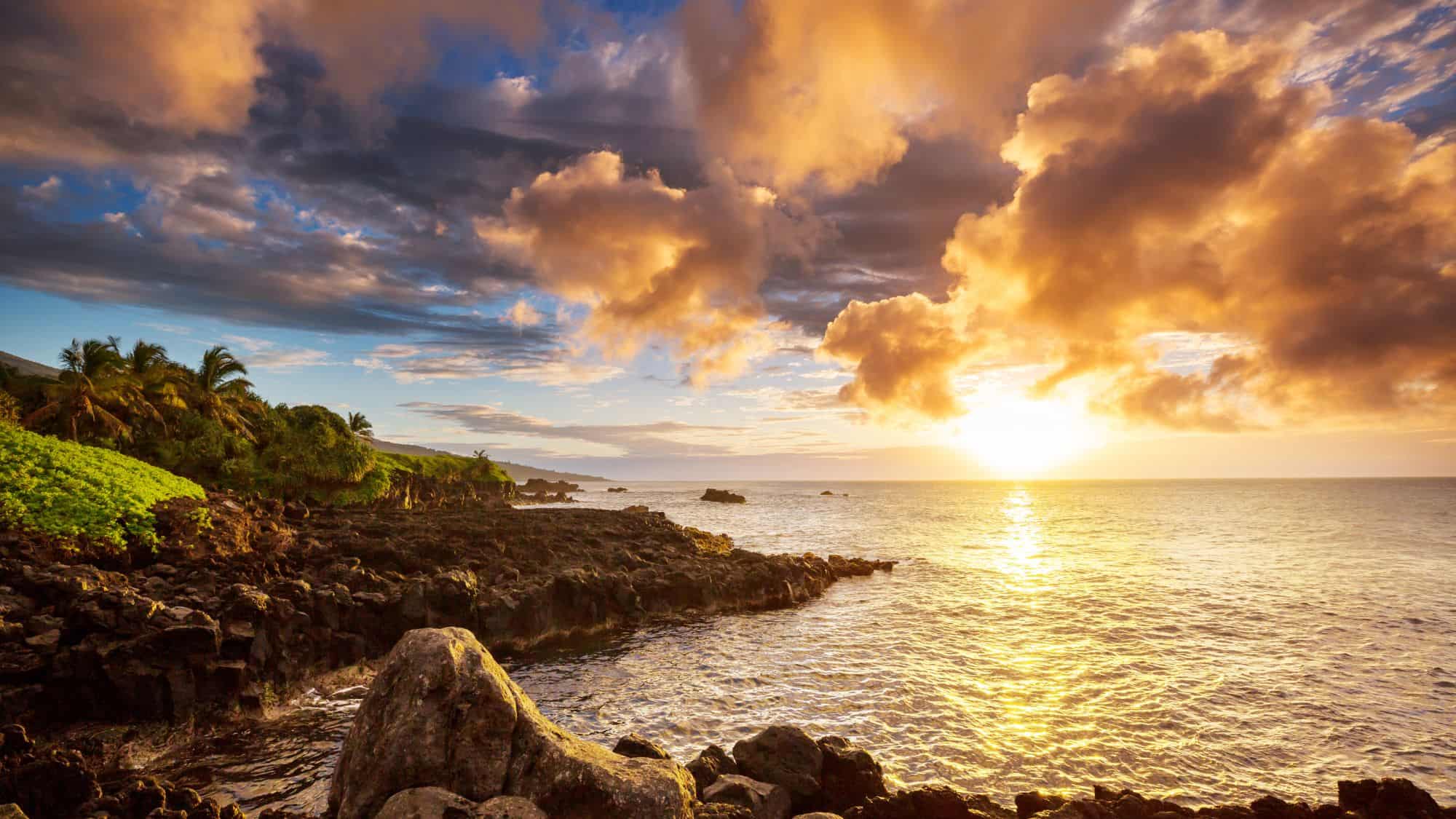
Maui is a paradise, but in winter, it is a crowded paradise that can test your patience.
This is peak whale-watching season, which draws huge numbers of tourists hoping to see the gentle giants. The Humpback Whale National Marine Sanctuary is right there, and about 10,000 whales migrate to Hawaii each winter.
Everyone wants to see them, which means the waters are crowded with boats, and the roads are clogged with cars.
The famous Road to Hana becomes a bumper-to-bumper procession of rental convertibles. And you spend more time staring at the brake lights of the Mustang in front of you than at the waterfalls.
Hotel rates are at their absolute highest during these months. You will pay top dollar for a room with a “garden view” that is mostly a view of the parking lot next door.
Dinner reservations at popular spots are booked months out, so if you did not plan your meals back in October, you are eating takeout on the curb.
Traffic in Lahaina and other resort areas can also be brutal. You are supposed to be on island time, but that just means everything takes twice as long as it should.
Jackson, Wyoming

Jackson is famous for its steep terrain and authentic cowboy culture, but it has become incredibly trendy in recent years.
The town square, with its elk antler arches, is iconic; the arches are made from roughly 10,000 pounds of antlers shed by the National Elk Refuge herd. But the secret is out, and the billionaires have moved in, pushing real estate prices into the stratosphere.
This has driven out many locals and service workers, leading to staffing shortages at restaurants and hotels. You might wait an hour for a table because there is simply no one to serve you.
The skiing is notoriously difficult. Jackson Hole Mountain Resort is known for having some of the most challenging in-bound terrain in North America. If you are looking for easy cruising runs, you are definitely in the wrong place.
And the cost of lodging is eye-watering, even for basic motels. You pay luxury prices for rustic accommodations that haven’t been updated since the 90s.
The airport also frequently closes due to weather. You might get stuck there for days, paying extra for a hotel while you wait for the storm to clear, which is an expensive way to end a trip.
Costa Rica

Costa Rica is the undisputed eco-tourism capital of the world, and winter is the dry season, which means perfect weather and maximum crowds.
Everyone comes to see the sloths and monkeys without getting rained on. In fact, Manuel Antonio National Park is so popular that it has to strictly limit the number of visitors each day.
You have to buy tickets online well in advance, and if they sell out (which they often do), you are out of luck. You just traveled all that way to stand at a closed gate, which is a heartbreaking way to spend a vacation day.
The prices for tours and shuttles are at their absolute peak during these months. You pay a premium for everything from zip-lining to coffee tours.
The roads can be rough and winding, meaning driving takes much longer than you think. A distance of 100 miles might take four hours or more. You end up spending a lot of your precious vacation time in a van bouncing over potholes.
Sure, the biodiversity is amazing. After all, Costa Rica holds 5 percent of the world’s biodiversity in a tiny landmass. But sharing that biodiversity with thousands of other tourists in the winter dilutes the wild feeling.
Like Our Content? Follow Us On MSN (or click the Follow Button above) to see more from Traveling In Focus.